


Startups: Guard Against Costly IP Mistakes
05 February 2026
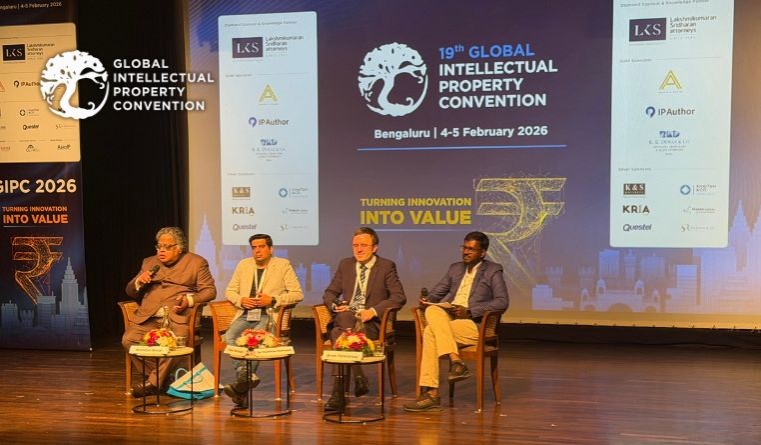
A full‑length session on “IP Strategy for Startups” brought together intellectual property experts, technology leaders, and startup advisors to highlight the pivotal role of IP in shaping business growth, investment readiness, and global competitive advantage. The session—beginning with foundational insights and continuing into a detailed panel discussion—provided a unified message: startups that treat IP as an afterthought risk losing market opportunity, investor confidence, and technological ownership.
IP Must Shift From Afterthought to Foundation
Opening the session, Anindya Sircar, chair professor of IP at NALSAR University reminded attendees that many of the world’s most successful companies began in modest settings but grew because of bold ideas, curiosity, and a strong innovation culture. What separates successful innovators from the rest, the Sircar emphasized, is an early, integrated approach to intellectual property.
IP—whether patents, trademarks, copyrights, or trade secrets—is often ignored in the early stages of a startup’s journey. But the speakers warned that this oversight can be costly. IP is not merely a legal formality, they said; it is a strategic asset that attracts investors, builds trust, and forms the basis of long‑term competitive advantage.
IP Strategy as a Growth Engine—Not a Legal Formality
The discussion opened with a reminder that intellectual property is not merely documentation but a strategic foundation for growth. Sircar emphasized that many iconic companies began in small, resource‑constrained environments but survived because they protected ideas early and created structures that allowed innovation to flourish.
For startups, he stressed, IP should not be an afterthought. Patents, trademarks, copyrights, and trade secrets collectively define a young company’s competitive advantage—and investors increasingly scrutinize IP strength before committing capital.
Risk Mitigation Must Start Early
Vivek Doulatani, representing Blu Halo, outlined the real‑world problems startups face when they delay their IP strategy. Instead of focusing solely on patents, he said founders must ensure they own everything they build, use proper agreements, and identify IP risks from the beginning.
Many startups mistakenly believe that filing one patent is sufficient. Doulatani argued that IP is an ecosystem: it requires documentation, agreements with employees and contractors, internal processes, and alignment with business goals. Blu Halo, he explained, helps early‑stage companies establish this structure while coordinating external expertise for drafting and filing.
AI Can Cut Costs—But Founders Must Use It Carefully
Matthias Hoffmann, partner at Boehmert & Boehmert and co‑founder of PatentMaker, turned attention to the emerging role of artificial intelligence in patent generation. He noted that startups, especially in India, face high costs when expanding into European and U.S. markets. AI‑assisted drafting tools, he said, now offer a cost‑efficient first step.
However, Hoffmann warned that founders must remain cautious: tools like ChatGPT are not designed for confidential inputs, and poorly trained users may inadvertently disclose sensitive information or generate legally weak claims. Patent attorneys, he said, remain essential for final drafting and validation.
Five Costly Mistakes Startups Make in Managing IP
Arvin Tamilarasu, Manager IP & Strategy, Simpleenergy Private Limited, identified several recurring errors they encounter in early‑stage companies:
- Filing before understanding the market—leading to patents that quickly become obsolete.
- Disclosing innovations too early, destroying patentability before filing.
- Failing to secure ownership, especially with contractors or departing founders.
- Filing overly narrow patents that can be easily bypassed.
- Skipping Freedom to Operate (FTO) analysis, exposing startups to infringement risks.
Examples ranged from robotics startups patenting features buyers no longer wanted, to founders losing rights to contractors because agreements were unclear or nonexistent.
Balancing Speed to Market With Protection
Startups often prioritize quick product launches, but Doulatani emphasized that moving too fast without IP protection can lead to devastating setbacks. Provisional patents were recommended as a flexible and cost‑effective way to secure early filing dates.
However, Hoffmann cautioned that European patent rules do not treat provisional filings as flexibly as the United States, meaning founders expanding into Europe must understand stricter amendment limitations.
Preparing for Acquisitions and IPOs
As companies mature, investors and acquirers dig deep into IP portfolios. Tamilarasu explained that buyers evaluate:
- clarity of ownership,
- competitive positioning,
- technology scalability,
- and whether the IP blocks competitors effectively.
A comprehensive IP audit, they said, is essential before any acquisition or IPO process begins.
Build vs. Buy: Choosing What to Develop Internally
Tamilarasu also addressed the build‑versus‑buy dilemma. Core IP, speakers agreed, should always be built and held internally. Non‑core components may be outsourced, but only with strong contracts that protect licensing rights, confidentiality, and long‑term ownership.
Tailoring IP to Industry Needs
Different industries demand different IP strategies. For example, EV startups rely heavily on patents, designs, and trademarks, while companies in aerospace or space technology depend more on trade secrets. Founders were urged to seek advisors with specific domain experience rather than rely on generic legal templates.
IP Is Strategy, Not Paperwork
Across the panel, experts reinforced a single theme: IP is a strategic business tool, not a legal luxury. The startups that protect their innovations early—through the right filings, agreements, audits, and processes—are the ones that survive investment rounds, scale globally, and maintain long‑term market leadership.
Speakers were addressing delegates on the first day of the GIPC, being held in Bengaluru, India on February 4 and 5, 2026
- Darren Barton, from Bengaluru