

The Future If – Artificial Intelligence & Copyright Law
23 April 2018
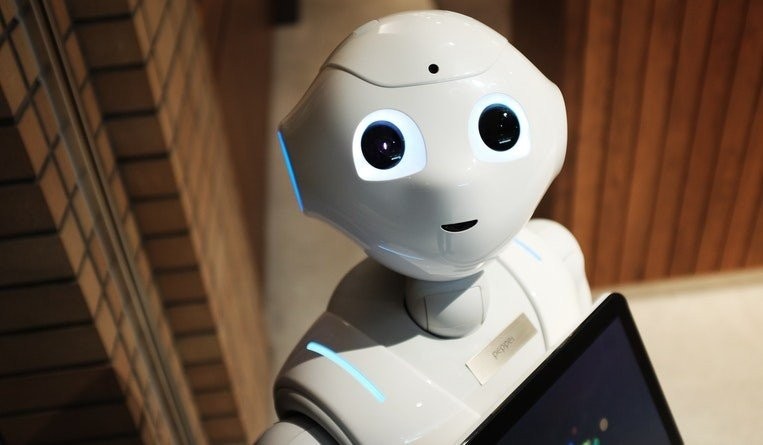
Expression and creativity are no longer innate only to human beings. Advanced algorithms that mimic the biological neural network, popularly called artificial intelligence, or AI, are now capable of creating an array of content, be it painting, composing music or putting together a musical.
Google, with its AI company Deep Mind, has been able to create software which can generate music through sounds that have never been heard before. The company’s visualization tool, Deep Dream, has been able to recreate unique, unpredictable and psychedelic images. Another such AI is The Next Rembrandt, a new artwork project which can recreate artistic works of a renowned Dutch Artist, Rembrandt Harmenszoon van Rijn. These unprecedented advances in machine learning warrant the need to address their implication in the field of copyright law.
Machines are beginning to create and invent things that would be protected by copyright if they were created by a human. But since machines lack the characteristics and attributes which are intrinsic to humans, then the question which begs to be answered is, who “owns” copyright in this content?
Taking the example of Deep Mind, some of the ownership options are the software builder, i.e. the team who wrote the algorithm or the computer program; the company which sells the software, i.e. Deep Mind; the distributor, i.e. Google, which acquired the company and is making the music available to consumers; the AI itself, i.e. the interface which produces music; the user, i.e. the people who cause the music to be generated; or a combination of all of the above.
These computer-generated works are very different from those which are computer-aided. In the latter, human intervention is required and an ancillary role is played by the computer program, thus making it clear that the person is the author. However, in the former, it is the machine itself which creates the content.
Traditionally, for a person to claim ownership for a copyright, he must fall under the aegis of a ‘author’ under the Copyright Act. It remains to be seen whether this concept is broad enough to apply to machines and software.
Whether authorship requires a creativity or input from humans depends on how courts interpret the originality requirement. In India, for a work to protected by copyright, there must be a minimal degree of creativity along with a substantive level of variation from a previous work.
Going forward, should the law recognize creativity and originality of AI-generated works? If so, should the law redefine authorship to include non-humans or non-legal entities?
Some scholars argue that redefining copyright to include non-humans would provide an incentive to encourage AI growth and development. However, this would also imply that the works generated by the AI would not fall under the public domain and this could open a Pandora’s box of misuse and exploitation. Further, non-humans cannot be held liable in a possible infringement lawsuit.
Thus, the most sensible approach would be to exclude the AI machine itself from the authorship. However, the question still remains as to who owns the copyright in AI- generated works.
A key factor to determining ownership is the nature of the algorithm or program itself. As we know, the final AI product is dependent on the algorithm or underlying code of the AI. Thus, it is pertinent to determine the amount of freedom to create works suo motu, as conferred by the algorithm before deciding on who enjoys authorship in such works.
Another factor is to consider the overall social benefit accrued by the copyright attribution process. The entity which has the greatest share in the realization of such social benefit perhaps has the greatest claim to authorship, as well.
Then again remains the concept of joint authorship, which can hand out mutual benefits to software builders and the MNC owning the software; the MNC and the end-user, etc. Though very conceivable in theory, this approach has limited application in the real world as it is difficult to establish a join intent in case of a remote user as there would be no harmony between parties.
Therefore, the most logical methodology would be to assign authorship on the person (whether a natural or a legal entity) or the team who contributed the most in the formation of the work in terms of its “creativity.” Of course, this should be deciphered, keeping the overall social benefit in mind. This will ensure that the companies keep investing in technology knowing that they will be reaping its benefits. While we await the creation of a fully autonomous AI system, it is certain that copyright laws are moving away from their original standards, which were limited to skill, labor and effort and the question of whether ownership by non-humans covers not only acts of animals, but those of machines and software as well.
Siddhant Chamola and Vrinda Gambhir contributed to this story.
First Channel Building
Plot No. 17 A, Sector 16 A
Film City, Noida 201301 (UP)
India
T: +91 120 4059300
F: +91 120 4243056 - 058
E: email@anandandanand.com
About the author


Law firms