


Assessment of registrability of slogan – A case study in Singapore
27 April 2026
Taiwan Semiconductor Manufacturing Company Ltd (TSMC) applied to register “UNLEASH INNOVATION” (the application mark) in Singapore for various goods and services relating broadly to semiconductor manufacturing and related technological services in Classes 9, 40, and 42.
The application was objected to for being descriptive and for lack of distinctiveness. TSMC was invited to submit evidence of acquired distinctiveness through use in Singapore for at least five years before the application date. TSMC declined to do so and argued that the application mark possesses inherent distinctive character and should be registered even in the absence of any evidence of use.
Subsequently, TSMC made a request for reconsideration wherein a fresh panel of experienced examiners would review the examiner’s decision. The panel agreed to waive the descriptiveness objection, but maintained the objection for lack of distinctiveness.
TSMC then requested for an ex parte hearing, which was heard by the Principal Assistant Registrar (PAR). During the hearing, TSMC was directed to make further submissions on whether the registration of the application mark for the its services of interest in Class 40 could extend protection to its goods of interest in Class 9, and whether the corresponding application in the UK had been filed in Classes 40 and 42 besides Class 9, as well as whether corresponding applications had been made in any other common law jurisdictions.
In response, TSMC advanced several arguments to show that the application mark is inherently distinctive in relation to the goods and services applied for.
Resonance and originality
TSMC submitted that the phrase “UNLEASH INNOVATION” is not a commonplace expression but has resonance and originality.
In particular, TSMC argued that the word “unleash” is unique and unusual when paired with “innovation”, requiring consumers to undertake a degree of cognitive interpretation to place the phrase into context.
According to TSMC, this conceptual interplay would cause consumers to perceive the mark as conveying substantive differences in meaning.
Distinctiveness in relation to Class 40 services
TSMC asserted that even if the application mark is rejected for goods and services in Classes 9 and 42, it should nevertheless be accepted for the services applied for in Class 40. TSMC contended that for “custom manufacture” services, innovation is not the primary role and the application mark can therefore be said to be distinctive of the Applicant’s services of interest.
Foreign registrations
TSMC also relied on registrations obtained in other jurisdictions (i.e. Hong Kong, Europe, the United Kingdom, the United States of America, Japan and the People’s Republic of China), arguing that these registrations were indicative of the mark’s distinctiveness and supported its registrability in Singapore.
Analogous Singapore registrations
Finally, TSMC pointed to analogous slogan marks containing the word “innovation” which had previously been accepted for registration in Singapore, submitting that the present mark should similarly be regarded as registrable. In particular, TSMC highlighted a prior registration for “EMPOWERING INNOVATION” in respect of (among other things) “semiconductor integrated circuit” (in Class 9) and “semiconductor integrated circuit design services, development services and technology consultation services” (in Class 42).
Tribunal’s decision
The PAR ultimately upheld the refusal of the mark for lacking distinctiveness. The PAR’s key findings include:
- While slogan marks are not excluded from registration, the application mark is a slogan which many different traders would like to use when talking about innovation and hence would not be regarded as an indication of trade origin;
- Registration of the application mark under Class 40 could lead to “back door” protection for Class 9 goods (which are similar to Class 40 services) for which the mark was clearly not distinctive;
- Foreign registrations are not binding in Singapore because trademark law is territorial, and the relevant laws and practices in different jurisdictions may differ. Additionally, no decisions explaining the reasons for acceptance were issued in respect of the foreign registrations relied upon by TSMC; and
- The analogous Singapore registrations which TSMC relied on were not identical to the application mark and/or were used for different goods or services. Moreover, since there is no clear bright line between a mark that is “devoid of distinctive character” and one which barely crosses this threshold, the Trade Marks Registry has consistently maintained that such local “precedents” are of limited (if any) persuasive value.
This decision provides useful guidance on the registrability of slogan marks in Singapore, particularly in technology-related industries. It also underscores the relatively high threshold for the inherent distinctiveness of advertising slogans, particularly where the phrase conveys a straightforward promotional message relating to the goods or services concerned.
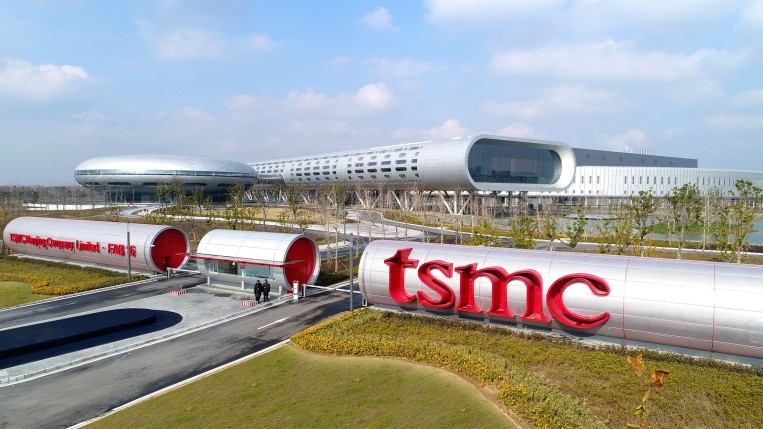
Photo: Taiwan Semiconductor Manufacturing Co., Ltd.
About the author

Law firms