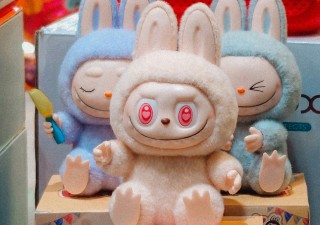


Mirror, mirror on the shelf: The rise of the dupe culture
28 July 2026

The good and bad sides of dupe culture. Excel V. Dyquiangco breaks down how imitation can dilute exclusivity but also keep brands at the centre of attention.
Luxury brands have always been synonymous with exclusivity and prestige. But these days, with the emergence of new consumer behaviours, these products are now being relegated to the top shelf backed by a disturbing platform: dupe culture. Short for “duplicate,” a dupe refers to an item designed to closely resemble a more expensive or well-known handbag or make-up kit – often at a fraction of the price. Across social media platforms such as TikTok and Instagram, creators routinely share “dupe finds,” presenting budget-friendly alternatives to luxury fashion, cosmetics and lifestyle products.
For consumers navigating rising living costs, dupes can feel like a win, allowing them to replicate popular styles without paying premium prices. But behind the viral posts and enthusiastic product comparisons lies a growing conversation about where affordability ends and intellectual property concerns begin.
“The phenomenon has exploded primarily due to social media, where the #dupe hashtag and other similar indicators have gained immense popularity,” said Amita Haylock, a partner at Mayer Brown in Hong Kong. “Influencers have normalized dupe culture, often presenting these products as ‘budget-friendly alternatives’ to luxury products and showcasing side-by-side comparisons. Several factors drive this popularity – rising luxury prices, cost-of-living pressures and a consumer paradox whereby younger audiences desire the prestige of luxury brands but are unwilling or unable to pay full price. Many consumers also believe affordable alternatives perform comparably to luxury brands, further fueling demand.”
For Aparna Watal, a partner and head of trademarks at Halfords IP in Sydney, the dupe culture has exploded largely because of three reasons: social media virality, economic accessibility and a generational shift in consumer culture that appears to be more value-driven.
“Platforms like TikTok and Instagram have turbo-charged the trend,” she said. “They reward quick, visual comparison videos of ‘$80 v. $12’ and play a pivotal role in the proliferation of the dupe economy. The consumer profile has also shifted. When consumers buy into dupe culture, it’s because the affordability and accessibility of the product are too attractive to ignore. Dupe culture, in a sense, democratizes aspiration. Consumers still want the aesthetic and experience of premium brands, but they are increasingly comfortable buying a cheaper alternative that signals the same vibe.”
This was echoed by Jyeshta Mahendran, a partner at Shearn Delamore & Co. in Kuala Lumpur, who added that influencers and content creators alike, with their large audience of followers, seek inspiration and the validation that comes from the appeal of owning luxury branded products and would showcase content featuring more affordable alternatives.
“This generally achieves traction from consumers who are always on the hunt for cheaper, high-quality and more affordable alternatives, which as a result has contributed to dupe culture becoming part of mainstream consumer behaviour,” she said. “‘Quiet luxury’ products which emphasize more on craftsmanship and heritage and present minimal branding or logos on their product can also unintentionally attract dupe products. Alternatives to ‘quiet luxury’ dupes are frequently promoted on social media platforms based on the aesthetic look of the product as opposed to its branding appeal, which sometimes can be difficult to enforce due to the absence of the brand or logo. However, it is important to remember that brands build their loyalty and devotion through quality and craftsmanship, which dupes cannot completely match.”
The impact to brands and trademarks
Justin Lai, an associate at Mayer Brown in Hong Kong, said that the dupe culture is compelling brands to adopt more comprehensive, multi-layered intellectual property strategies.
“As dupes typically avoid directly copying logos or brand names, protection of conventional trademarks alone is often insufficient. Consequently, brand owners are increasingly investing in protecting the overall visual appearance of a product as an identifier of its source – that is, the product’s distinctive shape, packaging designs and trade dress – seeking broader protection such as through registration of design rights and shape trademarks,” he said.
He added: “In terms of commercial strategy, brand owners are implementing robust online monitoring systems to track references to their trademarks combined with keywords such as ‘dupe’ or ‘clone.’ However, enforcement action should be carefully balanced against reputation management – over-enforcement can create reputational backlash, while inaction risks eroding brand value and consumer trust. Overall, this has led to a more strategic approach, with brand owners typically choosing targeted enforcement against particularly egregious cases rather than pursuing every dupe.”
Watal, meanwhile, added that the dupe culture has exposed a critical gap in the way most brands have historically approached trademark protection: they register their name and logo, but leave everything else, including their product shape, colour, packaging and texture, unprotected.
“When dupes arrived, they simply walked through that gap,” she said. “The issue isn’t that trademark protection ‘doesn’t work’ against dupes; it’s that too often brands rely on narrow, weak or poorly aligned rights that fail when dupes strike. When protection is half-measured, it’s not trademark protection that fails – it’s the strategy.”
“This is prompting a fundamental rethink,” she continued. “Dupe culture won’t end brand enforcement; it will redefine it. The speed at which dupes hit the market makes real-time takedowns impossible, but this is prompting a return to legal deterrence through more structured filings and strategic opposition programs. Rather than chasing every infringer, brand owners will shore up their IP portfolios.”
“The shift I am observing across the market includes increased trademark protection of brand elements beyond the word mark; more design registrations by fashion brands for distinctive silhouettes, unique packaging, hardware details and surface patterns; and greater reliance on copyright law to target dupes where original prints, artistic patterns, packaging or artwork have been intentionally copied,” she said.
According to Naagathurga Vijaya Kumar, an associate at Shearn Delamore & Co. in Kuala Lumpur, brand protection and strategy have changed over the years with the growing dupe culture.
“Traditionally, trademark protection focused on preventing the direct use of similar or identical brand names and logos. Entities would typically take action against counterfeit products that used their trademarks without permission,” she said. “However, dupes often avoid using a trademark which is identical or similar to the trademark used on well-known products. Rather, as previously stated, it imitates the appearance, packaging style, product design or functions of the original product. This poses a challenge to the brand owners as the above-mentioned elements are not always subject to protection and may not be eligible for intellectual property protection in some jurisdictions.”

“As a result,” she continued, “many brands are now put in a position to be more innovative in crafting their branding strategy and intellectual protection, which includes expanding their scope of IP protection beyond trademarks and enforcement through the common law tort of passing off. Companies are increasingly registering not only brand names and their logo, but they have also expanded their protection to include their packaging design and product shapes through the protection offered under the laws of industrial designs. In addition, brand owners have also begun obtaining protection for elements such as colour scheme, scent or even sounds. Such non-traditional trademark protection can strengthen the overall protection of their brands.”
Beyond registration and internal enforcement actions of brands, she said, have also become an important aspect of brand protection in addressing dupe culture.
“Brand owners are increasingly conducting surveillance and monitoring activities on e-commerce platforms and social media platforms. This is also due to the rise in the number of social media influencers who openly promote and make comparisons between the original product and its dupe. Aside from that, there are also physical retail stores that mimic the overall outlook and appearance of an established brand store, including similar layouts and displays. In such circumstances, brand owners may have a recourse under the law of passing off, as the imitation of a store’s get-up may mislead or confuse consumers into believing that the ‘dupe’ store is endorsed or somewhat associated with the original brand,” she said.
She added: “Further, brand owners have also become more active in scrutinizing their licensing arrangements in response to the rise of dupe culture. By carefully structuring and monitoring such arrangements, brand owners are able to retain control over how their trademarks, store concepts and product presentations are used by authorized parties. This ensures that any licensed use of the brand remains consistent with the brand owner’s standards, while preventing misuse that could dilute the brand or create confusion in the marketplace with the dupes.”
Significant risks to trademark holders
Haylock said that dupe culture poses several significant risks to trademark holders.
- If consumers purchase inferior dupe products believing them to be comparable, unsatisfactory experiences may harm the original brand’s reputation through perceived association. The consequences may be severe, with the brand owners simultaneously suffering from lost sales and reputational harm.
- The normalization of dupes through influencer marketing can erode the distinctiveness and prestige that luxury trademarks convey, potentially diluting brand value over time. Put simply, where luxury marks constantly appear alongside inferior goods, the appeal and distinctiveness of those marks may gradually diminish.
- Brands that fail to enforce their rights risk weakening their legal position in future disputes; consistent inaction may undermine claims of trademark strength or consumer association.
“These risks are exacerbated by the nature and proliferation of dupes. Even if a consumer purchases a dupe knowing it is not the original product, other consumers seeing the dupe in public may not be able to tell the difference, mistakenly associating the dupe with the original brand. In extreme cases, as more and more dupes enter the market, a tipping point may be reached where the dupe becomes more popular than the original product, undermining significant investments made by the brand owner in developing the original product,” Haylock said.
Watal, on the other hand, said that the risks run in two directions: competitive erosion and brand dilution.
“If competitors replicate not just the concept but the visual identity or branding cues, consumers may start believing the products are connected. That is where trademark and consumer law issues emerge,” she said. “There are two main dangers: brand dilution and customer confusion. If many look-alikes flood the market, the distinctive identity of the original brand can weaken over time. If packaging, product names or marketing become too similar, consumers may mistakenly believe the products come from the same company.”
Mahendran, meanwhile, said dupe culture on a larger scale poses risks to trademark owners if not monitored and controlled, as it presents an infringement of their intellectual property rights.
“Widespread imitation further dilutes the distinctiveness of a brand. If many competing products adopt similar designs or packaging styles, it may become harder for consumers to distinguish the original product from others in the market. This disincentivizes brand owners and creators of intellectual property rights to innovate and further diminishes the injection of research and development efforts to create higher quality products,” she said.
She added that emphasis on creating dupe products not only creates unfair competition in the market, but risks product features and brands becoming generic over time. “When consumers begin to use a term to describe a type of product rather than a specific brand, the trademark may lose its ability to function as a source identifier,” she said.
“Intentional copying of the trademark, product features, packaging leads to the creation of sub-standard products with lower performance, quality and durability which can compromise safety standards to the detriment of consumers,” she said.
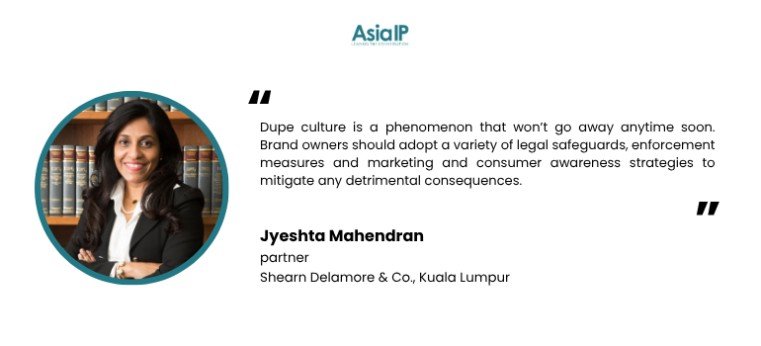
She added: “Dupe culture is a phenomenon that won’t go away anytime soon, and brand owners in protecting themselves from the negative effects of dupe products should adopt a variety of legal safeguards, enforcement measures and marketing and consumer awareness strategies to mitigate any detrimental consequences. Brand owners should actively monitor the market, social media platforms and online marketplaces to identify emerging dupe trends and issue take-downs of infringing dupes. Early detection allows companies to quickly respond before imitation becomes widespread.”
Strengthening a brand?
In some cases, the dupe culture can – and does – strengthen a brand. “Paradoxically, dupe culture can benefit original brands in several ways,” said Haylock. “Research suggests that dupes can actually expand the overall market by providing consumers a low-entry point to try new product types; once familiar, some consumers subsequently ‘trade up’ to luxury versions. Dupes may also incentivize luxury brands towards greater innovation, motivating them to create truly novel products or techniques that cannot be easily duplicated.”
“There is also risk in the opposite direction,” she added. “Aggressive enforcement may alienate consumers, causing more reputational harm to the brand than the dupes themselves. Brands with strong customer loyalty and ‘cult favourite’ status often find their core consumers remain loyal regardless of dupe availability, as distinct customer segments exist between those seeking value and those prioritizing premium quality. This has led some brand owners to view dupe culture as evidence of brand desirability and market influence, treating imitation as flattery.”
Watal said that if handled carefully, dupe culture can actually reinforce a brand’s prestige. “If consumers are constantly comparing other products to yours, ‘This is a dupe for X,’ it can cement the original brand as the benchmark or gold standard,” she said. “Luxury fashion and beauty brands often benefit from this dynamic. Even when cheaper alternatives exist, the comparison reminds consumers which brand set the trend in the first place. In those cases, dupe culture can function as free advertising.”
She added that counterintuitively, how a brand responds to being duped can itself become a brand-building exercise. Lululemon’s Align leggings, for example, show how savvy brands can turn dupe challenges into loyalty-building opportunities, such as hosting “Dupe Swap” events to highlight quality over imitation. Rather than litigating every lookalike into the ground, Lululemon invited consumers to compare items directly, confident that the quality of the original would speak for itself.
“This approach works where a brand’s core strength lies in product quality, craftsmanship or an authentic brand story that a dupe simply cannot replicate,” said Watal. “Being duped, in that context, is evidence of aspiration and it signals that the brand has achieved genuine cultural currency.”
There is also a strategic argument for restraint in enforcement, she said. “Brands that go in hard on dupes risk alienating their own consumer base. When the dupe buyer of today is the brand loyalist of tomorrow, aggressive legal action against dupe consumers or influencers can backfire commercially even when it succeeds legally,” she said.
“The dupe economy can also serve as a real-time market intelligence tool,” she noted. “Dupes cluster around the most recognizable, most desirable brand elements. Brands that monitor what is being duped gain direct insight into which brand identifiers resonate most strongly with consumers and which of those identifiers may warrant formal IP protection.”
“This is possible if consumers’ perception is as such that when they compare the brand with a cheaper alternative, the original product becomes the ‘gold standard,’” said Elisia Engku Kangon, a senior associate at Shearn Delamore & Co. in Kuala Lumpur. “In these situations, the existence of dupes can reinforce the idea that the original brand is desirable, influential and worth imitating. This can increase brand visibility and further strengthen consumer recognition.”
She said that, however, embracing dupe culture is not without risk. “If handled without caution, it can also undermine the brand’s exclusivity. When a brand becomes too closely associated with widespread imitation, it may gradually lose the sense of uniqueness or prestige that originally distinguishes it in the market,” she said.
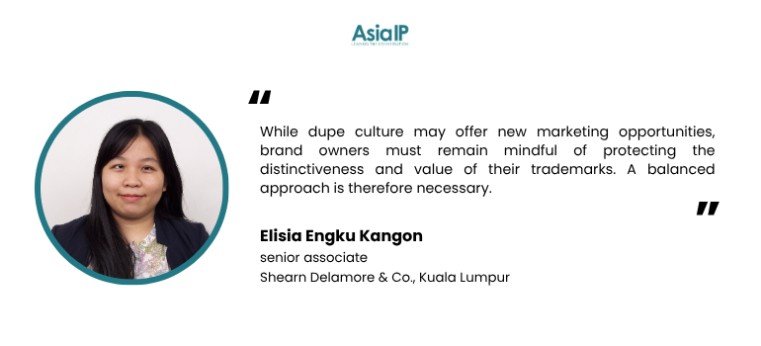
“For this reason, it is important for brands to monitor how their products and trademarks are being used and discussed,” she said. “This is especially in environments where dupes circulate quickly, such as social media or influencer marketing under paid partnership disclosures. While dupe culture may offer new marketing opportunities, brand owners must remain mindful of protecting the distinctiveness and value of their trademarks. A balanced approach is therefore necessary.”
Countering the dupe culture
Watal has several suggestions on how to counter dupes:
- Build a layered IP portfolio. In addition to trademark protection for all the various brand elements, brand owners should consider seeking design registrations for distinctive visual features and relying on copyright for original packaging artwork or marketing assets. Legal tools like passing off and consumer law also remain powerful, especially where the dupe’s packaging or marketing is likely to mislead consumers or cause confusion.
- Design for defence from the outset. If it’s not built to be defended, it’s built to be copied. Train marketing and buying teams to spot red flags, whether that is copycat dupes or risky influencer tie-ins. Make sure manufacturer, supplier and distributor contracts clearly identify IP ownership, prohibit unapproved variants and give the right to inspect and enforce those rights.
- Remember that protection isn’t about eliminating all imitation; it’s about defining and defending the lines no one else is legally allowed to cross. In a dupe economy, perfection is not the standard. Strategic, well-maintained and layered IP protection is.
For Mahendran, brands should also consider expanding their IP protection to cover all aspects of intellectual property rights, not only trademarks, but features of its distinctive packaging, colour combinations and product designs under the protection offered by industrial designs and other non-traditional trademark protection such as 3D designs, scent and smell, which are registrable under the Malaysian Trademarks Act 2019.
“Registering these elements can provide additional legal tools to address look-alike products,” she said.
She added: “Enforcement of IP rights should be strategic and flexible with various legal claims to be considered such as trademark infringement, passing off and industrial design infringement, amongst others. Brands should assess whether a particular dupe creates confusion or harms the brand’s reputation before deciding whether to take action. While enforcement by way of issuing cease-and-desist letters may be effective, different approaches, such as collaborating with social media platforms and creating consumer awareness on the differences between the dupe products in terms of quality, safety, and other ethical considerations are some of the ways brand owners can help to reduce the effect of dupe culture on their brands.”
“Ultimately, the dupe culture reflects the changing relationship between brands and consumer buying patterns. While it presents challenges, it functions as a new opportunity for brands to strengthen their identity and adapt to different strategies in the evolving marketplace to maintain brand loyalty,” said Mahendran. “Commercially, brand owners are more incentivized to innovate faster than dupes and frequently release new and updated designs, with many brand lines also introducing limited edition designs as a response to dupe products. Introducing a lower price collection of products or a different line under the same brand, with availability of the branded products at outlet stores, are also some of the ways of capturing customers who aspire to premium products at a lower price point.”