

Choreography, dance and busting the moves around copyright
31 July 2026
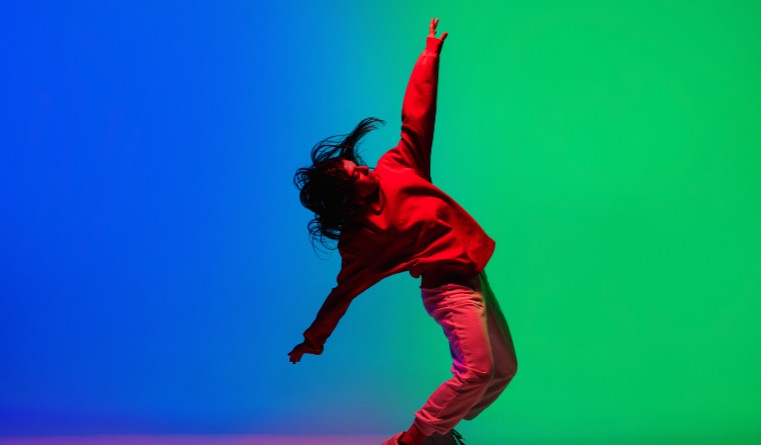
Can choreography be protected under copyright law? Experts tell Excel V. Dyquiangco how choreographers and content creators to protect their work.
A few seconds of choreography can now reach millions of people around the world in a matter of hours. Platforms such as TikTok, Instagram Reels and YouTube Shorts have transformed dance into one of the internet’s most powerful forms of expression, allowing creators to launch viral trends, build personal brands and even influence music charts.
This rise has blurred the boundaries between creativity, collaboration and copying. While social media thrives on participation, encouraging users to recreate dances through challenges and trends, it has also exposed significant gaps in intellectual property law, particularly in protecting choreography that exists in snippets lasting only a few seconds.
Yet behind every trending dance lies some legal questions: Can social media choreography be protected, particularly under copyright law? Who actually owns a viral routine?
“Dance choreography can be protected by copyright law, but with an important caveat,” said Son Doan, founding and managing partner at IPMax Law Firm in Hanoi. “Under the Berne Convention, choreographic works are explicitly recognized as protectable subject matter, and most national laws follow this. In Vietnam, theatrical or stage works are a protected category under Article 14.1(đ) of the Intellectual Property Law, and dance (múa) – including contemporary dance and ballet – is expressly included within that category by the implementing decree. Protection arises automatically upon creation; registration is not a prerequisite in most Berne member states, although it offers significant evidentiary and enforcement advantages.”
He noted that not every dance posted on social media qualifies, however. “There is a distinction between a genuine choreographic work, an original composition of movements, and simple routines or basic social dance steps that do not meet the threshold for protection. A short TikTok trend built from a few repeated gestures is unlikely to be copyrightable,” he said.
“The key two-part test, recognized across jurisdictions, is originality and fixation,” he explained. “If a short-form video meets both – it shows an original arrangement of movements, recorded on video – it is, in principle, protectable.”
In Malaysia, the Copyright Act 1987 protects works that are original and reduced to material form. “While the act does not explicitly mention choreography as a standalone category the way the U.S. Copyright Act does, a sufficiently original dance routine that has been recorded, for example, posted as a video on TikTok, could be protected as a film or artistic work under our legislation,” said Sri Sarguna Raj, a partner and head of IP, technology, media, sports and gaming at Adnan, Sundra & Low in Kuala Lumpur. “The two critical requirements under Section 7 of the Copyright Act 1987 are originality, meaning sufficient effort has been expended to make the work original in character, and fixation, meaning the work must be written down, recorded or otherwise captured in material form.”
He continued: “The moment a choreographer films and posts a dance routine on social media, that video is fixed, and copyright attaches automatically. No registration is required in Malaysia. The choreography embedded in the recording is protected to the extent that it reflects the creator’s own original expression. What is not protected are individual dance steps or common social dance moves. These are the building blocks of dance, and locking them up under copyright would be bad for creativity and expression generally.”
Originality in dance
Raj said that originality in choreography is really about creative authorship, not how complicated or novel the moves are. “You need to be able to show that the work reflects your own creative choices, not just a reproduction of steps already in common circulation,” he said.
He added that a useful reference point is the U.S. Ninth Circuit’s decision in Hanagami v. Epic Games in November 2023, where the court rejected the view that choreography is merely a collection of static individual poses. “The court said that approach would be like reducing music to just individual notes, and that choreographic works need to be assessed holistically, looking at the full sequence, the transitions, timing, use of space, energy and structure of the work. Epic Games ultimately settled the case in February 2024, which tells you something about how the law is moving in this area,” he said.
“For a routine to qualify, you generally need to show that it goes beyond a handful of basic moves, that the selection and arrangement of movements reflect genuine creative expression, and that it has been captured in some fixed form,” he explained. “The U.S. Copyright Office has in the past refused to register what it described as ‘simple routines,’ such as the Carlton (from The Fresh Prince of Bel-Air fame) or the Milly Rock (created by rapper 2 Milly), on the basis that they did not meet that threshold. So, the more expressive, structured and distinctive the work, the stronger the claim.”
For Ryan Su, a counsel at OC Queen Street in Singapore, the general copyright principles apply in determining if a dance routine qualifies for copyright protection. “The work must be an original work, be fixed in a tangible form and belong to a protected category under copyright legislation – as explained above in relation to a ‘work of dance’ qualifying as a ‘dramatic work’ which the act protects,” he said.
He added: “In terms of originality, a work of choreography may be original due to various aspects, such as rhythmic movements in a defined sequence or a defined special environment (such as a stage), dance movements or patterns organized in an integrated, coherent and expressive compositional whole, a certain story, theme or composition conveyed through movement, or in terms of a musical or textual accompaniment. A choreographer’s creative choices, or his or her unique take, rather than the use of common movements, would be determinative. It is to note that commonplace movements or gestures and social dances, such as ballroom or line dances are not protected by copyright.”
When social media can complicate originality
While dance routines and choreography need to be original, there are some instances in which social media avenues can complicate these viral steps. “Short-form platforms compress choreography into highly memorable, easily-replicable fragments – often just four to 16 counts of movement set to a 15 to 30 second audio clip,” said Doan. “This creates a paradox: the more ‘viral’ and easily copied a routine is, the more it resembles the kind of simple, repetitive movement that traditionally falls outside copyright protection.”
He added that a second complication is attribution drift. “A dance originates with one creator, is recorded, then re-recorded by thousands of others – often without crediting the original. Unlike music, which has licensing databases and recognition systems, there’s no equivalent infrastructure for choreography. Platforms like TikTok or Instagram generally don’t have a mechanism to trace or enforce authorship the way music rights are managed. This makes it practically very hard for an original creator to even establish ‘I made this first,’ which is the foundation of any infringement claim,” he said.
“For someone recreating a viral dance,” he added, “the ownership question is often genuinely unclear – multiple people may claim to have started a trend, the same movement combination may have appeared in earlier videos, and the line between ‘this is now a shared internet meme’ and ‘this is someone’s protected work’ is blurry in practice. The risk of infringement is especially high in a commercial context.”
For Raj, when you upload content to TikTok, you keep your copyright, but the terms of service require you to grant the platform a broad, royalty-free licence to use and distribute your content. “Most creators are not aware of this when they sign up,” he said. “The platforms are also built around copying. Features like duets, stitches and challenges are designed to get people recreating content, which is great for reach but makes it very hard to track or enforce ownership. On top of that, both platforms enjoy safe harbour protection, so the burden of policing infringement sits almost entirely with the creator. By the time a takedown notice is filed and acted on, the content has usually already spread widely. Attribution tends to disappear along the way too, which has real consequences for the original creator in terms of commercial opportunities.”
Su, however, said that he does not see social media platforms like TikTok and Instagram Reels solely as complicating issues of ownership and infringement, but are important catalysts in the push for innovation, reform and developments in the area of copyright protection for choreographers and dancers. “The reach and virality of these platforms democratize art forms like dance and bring them to audiences beyond traditional venues and engage new audiences. A work of choreography can be shared around the world instantly by uploading it and transcends borders and cultures. It is this very nature that makes ownership and enforcement challenging; there have been issues with identifying and crediting original creators amid the volume of user-generated content,” he said.
Protecting choreography and dance routines
What steps should choreographers and content creators take to protect their work? Doan listed some pointers:
- Choreographers should document their work meticulously through video recordings, notes, photographs, diagrams or dance notations; these materials serve as evidence of the work’s creation date and originality.
- It is also highly advisable to apply for copyright registration where possible. In Vietnam, as in many other jurisdictions, protection is automatic, so registration with the Copyright Office is not mandatory and is only declaratory in nature; but it provides crucial evidence in any dispute.
- Use platform attribution tools as supporting evidence, not as legal protection. Duet, stitch or collab tags help build a documented trail of origin, but they don’t replace formal registration.
- Wherever possible, assert a clear copyright claim and provide a practical way to be contacted for permission or licensing.
Raj, meanwhile, said: “The first thing I would advise is to get the work on record early. Copyright in Malaysia arises automatically once the work is created and fixed, but a timestamped upload or a filing under the Copyright (Voluntary Notification) Regulations 2012 gives creators something concrete to point to if a dispute arises. Making a habit of putting copyright notices in bios and video descriptions also helps establish ownership and deters casual copying.”
“On enforcement, both TikTok and Instagram have takedown mechanisms available. My advice is to document the infringement thoroughly before filing, and to act quickly. The longer it is left, the wider the content spreads,” he said. “For choreographers whose work is gaining commercial traction, it is worth thinking about licensing early. Allowing non-commercial fan recreations while retaining control over commercial use is a practical approach that balances reach with protection.”
He added: “On attribution, I would encourage creators to be vocal and consistent about it. The pattern of viral dances spreading without credit to the original creator is well-documented and genuinely unfair, often with real commercial consequences. Where there is commercial exploitation happening without consent, there are legal avenues worth pursuing, and the courts are increasingly receptive to these claims.”
On the other hand, Su emphasized the importance of ensuring that choreographers and creators fix their original work in a tangible form. “For a work of choreography or dance, such formats would include dance notation, video recordings of performances or textual descriptions, photographs and drawings. This would also serve as evidence of the existence of copyright and originality should a future dispute arise,” he said.
He added: “With social media, creators face the challenge of virality and worldwide fame and recognition versus the risk of non-attribution, unauthorized use and challenges and costs of enforcement in a multitude of jurisdictions. This is a situation where an immense opportunity is also met with great risk. One way of mitigating these risks is to use watermarks in recordings of dances or to use platform-specific tools to monetize and track distribution and analytics of uploads. There have also been calls for the creation and promotion of consolidated rights-management organizations for choreography – similar to that in the music industry.”