
Human rights in the age of IP
23 October 2026

The conflict between IP rights and human rights is not local, but universal. Excel V. Dyquiangco explores how four different jurisdictions are handling the conflict.
The relationship between human rights and intellectual property presents a complex and often contentious, yet crucial, area of study. While seemingly disparate, both domains fundamentally shape individual well-being and societal progress.
Human rights, enshrined in international declarations and covenants, emphasize universal entitlements such as the right to health, education and cultural participation. Conversely, IP regimes grant creators exclusive rights over their innovations and artistic works, fostering innovation and economic growth. These two bodies of law intersect when IP protections begin to impact access to basic human needs.
In Malaysia, this is particularly evident in healthcare. While Malaysia hasn’t ratified the International Covenant on Economic, Social and Cultural Rights (ICESCR), its courts have interpreted the right to health as part of the broader right to life under Article 5 of the Federal Constitution, especially when healthcare is crucial for preserving dignity or preventing death. Pharmaceutical patents, which grant exclusive rights to drug manufacturers, often lead to high prices for essential medicines, creating a significant challenge to this interpreted right.
Copyright law also impacts access to education and knowledge in Malaysia. Although there isn’t an explicit constitutional right to education, equitable access is a human rights concern. While copyright protects creators, overly strict enforcement can hinder access to educational materials, particularly for disadvantaged communities. Malaysia’s Copyright Act 1987 includes fair dealing exceptions for research, private study, and education, which are crucial for ensuring access to learning resources in an increasingly digital and economically diverse nation.
Beyond this, there’s a growing recognition of the need to protect indigenous knowledge and cultural heritage, which are often not adequately covered by conventional IP laws, aligning with the human rights of indigenous peoples to control their cultural heritage.
“At a foundational level, IP rights are legal instruments designed to incentivize innovation and creativity by granting temporary monopolies to creators and inventors,” said Eugene Ee, a partner at Wong Jin Nee & Teo in Kuala Lumpur. “These rights are enshrined in Malaysia under statutes such as the Patents Act 1983, the Copyright Act 1987, and the Trademarks Act 2019. Conversely, human rights – enshrined in the Malaysian Federal Constitution and reinforced through international treaties such as the Universal Declaration of Human Rights (UDHR) – are universal, inalienable rights inherent to all individuals.”
He added: “The tension arises because IP rights are exclusive and time-bound privileges, while human rights are inclusive and perpetual entitlements.”
Louise Buckingham, chief executive officer of the Arts Law Centre of Australia in Sydney, added that there are important provisions within human rights instruments that explicitly and implicitly reference IP and arguably indigenous cultural and intellectual property (ICIP), such as Articles 12 and 31 of the United Nations Declaration on the Rights of Indigenous Peoples (UNDRIP), and Article 27 of the UDHR, and other related provisions.
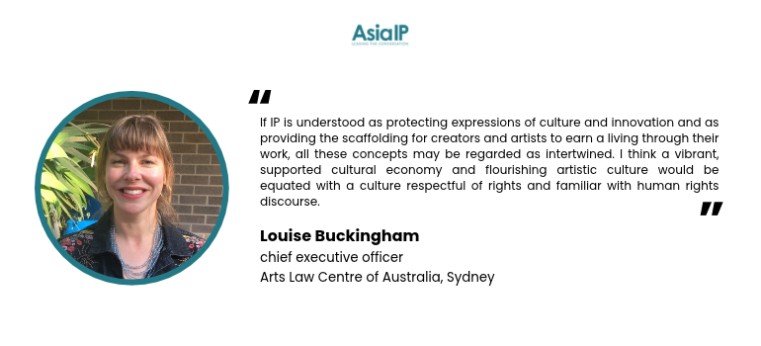
“If IP is understood as protecting expressions of culture and innovation and as providing the scaffolding for creators and artists to earn a living through their work, all these concepts may be regarded as intertwined. I think a vibrant, supported cultural economy and flourishing artistic culture would be equated with a culture respectful of rights and familiar with human rights discourse,” she said.
The Philippine Constitution, meanwhile, champions the protection of IP rights for scientists, inventors, artists, and other talented citizens, especially when their work benefits the public. This constitutional recognition highlights a fundamental principle: IP ownership is inherently linked to human beings – the creators, innovators, and inventors who exercise their inherent human rights through their work.
Beyond national law, international treaties aim to foster an environment that encourages innovation and creativity while simultaneously balancing public interest. While the state remains committed to upholding IP rights, the overarching goals of economic growth and cultural development must take precedence over individual profit. This ensures a harmonious relationship between protecting creators and benefiting society as a whole.
“Protecting traditional knowledge through IP rights can help preserve cultural heritage and support the rights of indigenous peoples,” said Divina Ilas-Panganiban, a partner and head of the intellectual property, data and technology practice group at Quisumbing Torres in Manila. “Notwithstanding the seemingly ‘selfish’ approach of vesting exclusive rights to IP owners, such that creators, inventors and artists have control over the use and distribution of their creations, the underlying ask of the Constitution is for IP rights to be beneficial to the public. This means that policy and regulatory measures must be directed towards achieving a balance between individual rights and the public good.”
Emphasizing mutual reinforcement
In Malaysia, a clear example is the way copyright law supports the right to cultural participation and expression, which is a protected human right under international instruments like the UDHR (Article 27) and the International Covenant on Economic, Social and Cultural Rights (Article 15).
For instance, copyright law in Malaysia, as governed by the Copyright Act 1987, grants protection to literary, musical, artistic and dramatic works, thereby incentivizing the creation and dissemination of cultural materials. By doing so, it helps realize the human rights of individuals and communities to freely participate in cultural life, both as creators and as consumers.
“This is particularly relevant in the Malaysian context, which is home to a diverse tapestry of ethnicities and cultural expressions. The legal recognition of works in local languages, music genres, and traditional art forms encourages cultural vitality and preservation, especially when creators feel that their contributions are legally recognized and economically viable,” said Ee.
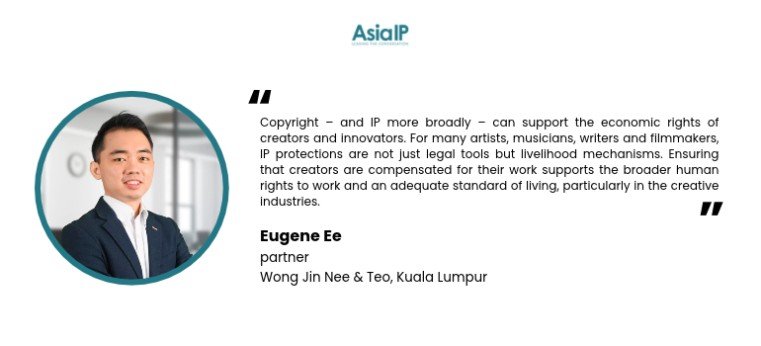
He added: “Furthermore, copyright – and IP more broadly – can support the economic rights of creators and innovators. For many artists, musicians, writers and filmmakers, IP protections are not just legal tools but livelihood mechanisms. Ensuring that creators are compensated for their work supports the broader human rights to work and an adequate standard of living, particularly in the creative industries.”
For Suebsiri Taweepon, a partner at Tilleke & Gibbins in Bangkok, a clear example is the right to access information and benefit from scientific progress. “Patent law, unlike trade secret protection, requires full public disclosure of the invention in exchange for protection. This promotes transparency and the diffusion of knowledge, empowering others to innovate further. Therefore, while a patent grants a time-limited monopoly, it ultimately contributes to the global knowledge base, advancing the human right to benefit from scientific progress,” he said.
In the Philippines, one example of how IP law can support a specific human right is through the protection of traditional knowledge and cultural expressions of indigenous peoples.
“Some countries have implemented community protocols within their IP frameworks, allowing indigenous communities to set terms for the use of their traditional knowledge. These measures not only support the economic rights of indigenous peoples but also uphold their human rights to cultural participation and self-determination,” said Ilas-Panganiban.
Geographical indications are also good examples of how the IP system can be used to uphold human rights.
“By protecting products that have a specific geographical origin and possess qualities or a reputation due to that origin, communities are able to protect their unique products, gain recognition and economic benefits. This is very much aligned with the Constitution, which mandates the State to promote a just and dynamic social order that will ensure the prosperity and independence of the nation and free the people from poverty through policies that provide adequate social services, promote full employment, a rising standard of living, and an improved quality of life for all,” she said.
When tension arises
However they support each other, tensions and challenges may arise in these two disciplines. A common – and, arguably, the most significant – area of tension between IP rights and human rights is in the pharmaceutical sector, particularly around access to essential medicines. This issue is commonly tested in Malaysia and globally.
“Pharmaceutical companies are granted patents which provide them exclusive rights to, among others, manufacture and sell new drugs, typically for 20 years under Malaysia’s Patents Act 1983,” said Ee. “While this incentivizes innovation and compensates R&D investments, it also enables monopoly pricing that can render essential treatments unaffordable to the broader public, especially in low- and middle-income countries.”
He added, “This creates a direct conflict with the human right to health, which, while not explicitly protected in the Malaysian Constitution, has been judicially read into Article 5, the right to life. The implications are particularly acute when life-saving treatments are priced out of reach for ordinary Malaysians.”
The challenge is also in the conflict of priorities in legal design, lack of explicit human rights considerations in IP legislation, and insufficient protection for collective and indigenous rights, said Ee.
He said: “Malaysia demonstrates a commitment to balancing IP with human rights by utilizing TRIPS flexibilities, such as the 2017 compulsory license for sofosbuvir that made hepatitis C medication affordable. This move prioritized public health over patent exclusivity. Malaysian courts have also contributed through purposive interpretation to broaden constitutional rights. Furthermore, even without formal ratification of all human rights treaties, international "soft law" instruments like UNDRIP and the Doha Declaration on TRIPS and Public Health influence national policy, guiding a more equitable approach to IP.”
Buckingham agreed, adding that in recent history, conflicts have been perceived between the IP rightsholders interests in the health industry and pharmaceutical spaces in the context of public health disasters like Covid-19 (and the development of treatments and vaccines around which patents as a form of IP might be involved) and public rights to access medicines.
“The counter argument suggests that IP mechanisms function to incentivize the invention of important, lifesaving medicines and that governments can still exercise policy levers to ensure health-assisting outputs are distributed equitably and are accessible by all (as can international trading and other relationships, ideally),” she said.
She cited a related example is that of Indigenous peoples’ rights to their culture and knowledge coming up against rightsholders of patents or trademarks associated with medicines based on knowledge that has been taken or misappropriated and that the profits generated from the use of have not been shared.
“Again, a different view might see the need to expand understanding of IP to encompass First Nations knowledge in the first place, something that the recent GRTK treaty text from the World Intellectual Property Organization tries to achieve through disclosure obligations on patentees,” she said. “Yet another related example involves trademarks in the context of tobacco advertising. In my present role, I am more focused on creators’ and artists’ rights in terms of relationships within the IP ecosystem, though in previous roles I have had more cause to look at things also from the perspective of other innovators and industries, too, and in all my work have considered the human rights and justice implications. That’s a constant theme.”
Taweepon said that one notable area is the right of inventors to determine how they protect their innovations.

“Rights holders may choose to file multiple patents to maximize protection, which is a lawful and rational business strategy. However, this can result in barriers for newcomers or smaller competitors, who may face higher entry costs or licensing hurdles. This may impede the right to access essential technologies, particularly when innovation is concentrated and the ability to build upon existing knowledge becomes restricted,” he said.
Working with human rights
For IP lawyers, businesses, or individuals, what should they know and consider when working with human rights in the perspective of IP?
“One of the most important principles for all stakeholders to recognize is that IP rights are not absolute,” said Ee. “They are statutory rights, not natural rights, and as such, are subject to limitations, exceptions and public interest considerations. Whether enforcing a patent or managing copyright licensing, parties must be aware of the boundaries of protection, especially when such rights impact access to essential goods or services.”
He added: “For businesses, particularly in sectors like pharmaceuticals, education or technology, there is a growing expectation of corporate social responsibility. Decisions around IP enforcement, licensing terms or pricing strategies must account for how these actions affect access – whether to medicine, knowledge, or cultural materials. Lawyers advising clients should consider public health exceptions, fair dealing provisions and compulsory licensing as valid tools, not loopholes.”
“For businesses working with traditional knowledge, indigenous designs, or cultural expressions, it is crucial to go beyond the letter of IP law and engage with ethical sourcing practices and prior informed consent. Although Malaysia is still developing legal protection for traditional knowledge, that does not absolve stakeholders from respecting customary rights and community ownership,” Ee said. “IP practitioners and rights holders should stay informed about international legal developments, including shifts in how human rights bodies interpret IP obligations, and evolving norms around digital rights, access to information, and genetic resources. Global standards are increasingly influencing local expectations, even in jurisdictions like Malaysia where certain treaties have not been ratified.”
Taweepon added that it is important to understand the policy framework of IP law in the relevant jurisdiction is essential.
“This includes not only statutory IP rights but also mechanisms for balancing interests, such as exceptions, limitations and licensing systems,” he said. “Second, lawyers advising rights holders must help them navigate regulatory considerations, especially where public interest intersects with enforcement. Exercising IP rights in a way that supports innovation, fair competition and public trust, not only protects the client’s interests but also strengthens long-term credibility and reduces reputational risks.”
He added: “Finally, we should not overlook the role of technology. Tools like generative AI are transforming access to knowledge and creativity. When used responsibly, they can promote human rights by enabling more inclusive innovation and participation in the digital economy.”
Buckingham said: “IP lawyers should be aware of aspirational international instruments, best practice protocols and all kinds of ethical guidelines and codes associated with cultural rights and how self-determination and sovereignty may be bound up with relationships and commerciality IP mechanisms are facilitating, and where infringement has occurred. They should also particularly be aware of Australia’s commitment to indigenous cultural and intellectual property standalone legislation, coming down the pike any time soon.”
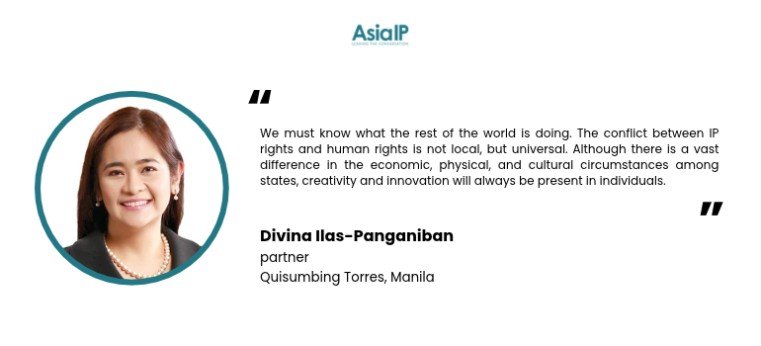
“We must know what the rest of the world is doing,” said Ilas-Panganiban. “The conflict between IP rights and human rights is not local, but universal. Although there is a vast difference in the economic, physical, and cultural circumstances among states, creativity and innovation will always be present in individuals. We need to stay informed of legal developments, case law and best practices in both IP and human rights disciplines. The constant longing to achieve a balance between these two areas does not discriminate as to country or race. Hence, as discussions continue, we want to actively participate in finding the best realistic and achievable solution.”