

Japan’s Supreme Court rules copying unprotected band scores can constitute a tort
15 October 2026
Japan’s Supreme Court has held for the first time that copying material that copyright law does not protect can still be a civil wrong when specific circumstances establish an infringement of legally protected business interests. On October 9, 2026, the Second Petty Bench unanimously dismissed an appeal by GLNET Co., Ltd. and its representative director. This left in place a Tokyo High Court award of about ¥169 million (US$1 million) in damages to the music publisher Fairy Co., Ltd., whose ear-transcribed band scores had been copied and posted free of charge on GLNET's website.
Justice Mamoru Miura presided, and Justices Akira Ojima and Junichi Takasu each wrote supplementary opinions.
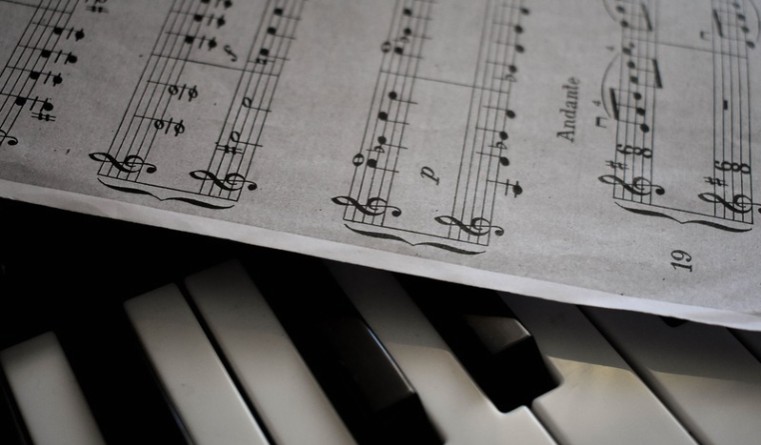
Fairy, a Tokyo-based publisher that obtains permission from the Japanese Society for Rights of Authors, Composers and Publishers (JASRAC) to use the underlying music, sells band scores transcribed by ear from recordings. The scores at issue did not qualify as “works” under Article 2(1)(i) of the Copyright Act because the transcriptions were not considered creative expressions. Fairy therefore did not claim copyright in the scores. It sued only in tort under Article 709 of the Civil Code.
The courts found that GLNET’s representative bought Fairy’s scores for 608 songs and passed them to staff. Of those songs, 598 were posted on the day of purchase or later. From December 2011 to June 2018, the GLNET+ site posted copies of 579 songs and earned money from advertising. The copies substantially reproduced the scores’ notation, with a reported similarity rate of more than 90 percent. Fairy sent a demand letter on June 3, 2018, and the site closed around the end of that month.
Fairy claimed ¥500 million. The Tokyo District Court dismissed the claim in September 2021 because it found no copying. On June 19, 2024, the Tokyo High Court reversed that ruling and awarded about ¥169 million.
The “special circumstances” test
The court applied its 2011 North Korean Films decision. That decision held that using unprotected material is not a tort unless “special circumstances” exist. This was the first time the Supreme Court found that such circumstances existed in this context.
In the court’s words, special circumstances arise when conduct “can be said to obstruct the appellee’s business by exceeding the bounds of free competition as understood by social standards, and to infringe the appellee’s business interests.” It found that GLNET’s copying “made it possible to take customers from the appellee with ease and had a direct and serious adverse effect on the continuation of the appellee's business.” It added: “It is clear that the appellants were aware of that.” It called the conduct “a competitive act that used markedly unfair means to make continuation of the appellee’s business difficult.”
According to the Yomiuri Shimbun, Justice Miura said that “the unauthorized publication of the imitations exceeded the scope of free competition, obstructed business and constitutes a tort.”
Justice Ojima stressed how narrow the ruling is. He wrote that “even an intellectual creation made with substantial expense and other effort may, as a general rule, be imitated and freely used by others.” He also noted that the analysis covered the period up to about 2018. He observed that technological advances could alter the circumstances relevant to the assessment. AI tools that transcribe music automatically could change the assessment for later conduct.
Justice Takasu described the defendants as having “relied on and used the fruits of the traditional business model and, on the other hand, exclusively collected the fruits of the new business model.”
Legal commentary
Tetsuo Maeda, a lawyer and visiting professor at Waseda University, offered analysis that fits the court’s approach. Hiroki Tajima and Yoshinobu Abumi of Nagashima Ohno & Tsunematsu saw the decision as a negative assessment of conduct that threatens an existing business model, cautioning that labour alone does not establish liability. Chiaki Kato, a patent attorney at Kubota Law Office, thought the High Court had gone quite far.
Critics were sharper. Professor Naoki Koizumi of Keio University noted that a government council had rejected a neighbouring right for score layouts. Yuichi Negishi of the Japan Patent Attorneys Association’s Copyright Committee warned against excessive state intervention. Ayaka Ishii of Kotto Dori Law Office observed that recognizing tort liability too readily could reduce predictability and chill legitimate uses.
Japan has no general unfair competition clause, so Article 709 offers a potentially applicable but narrow route to tort liability in exceptional cases involving the use of unprotected material. The Sankei Shimbun reported that the ruling could affect similar litigation. The threshold remains high, however: the decision concerned wholesale, knowing copying that seriously harmed the claimant’s business. Justice Ojima’s remark about AI suggests the analysis may shift as transcription becomes automated.
- Asia IP