

Makita gives severe rating to infringer
31 May 2026
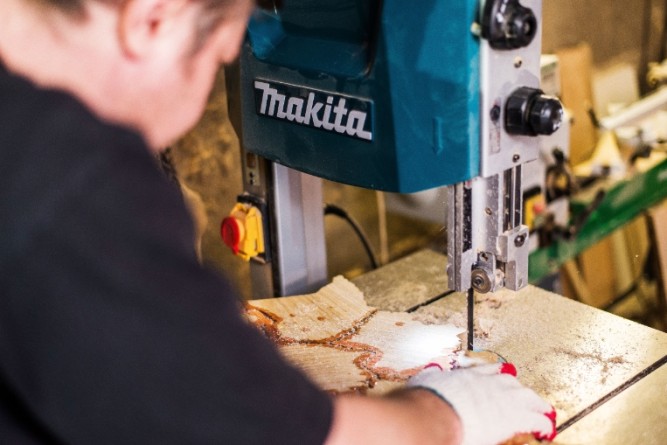
Makita is a familiar name to anyone who can make something with their hands. The Japanese company became popular in Russia years ago, and registered its trademark No. 1489375 (International registration) in respect of Classes 07 and 08.
Makita Corporation sued Mrs. Pyrozhok, an individual entrepreneur, and claimed R300 million (US$4.1 million) of compensation (Case No. A40-282612/24-110-2109). Makita found that Ozon, an internet marketplace, sells goods under the Makita trademark. To support its claim, Makita bought an electric plane carrying the Makita trademark. During visual examination it was found that there were some signs confirming the counterfeit origin of the plane: The name plate does not include the date of manufacture or the serial number of the article, there is no information about the manufacturer, nor are there other features confirming lawful origin of the article.
Makita sent a cease and desist letter to the infringer on September 20, 2024, which was left without response. While preparing the claim Makita requested and obtained information from a specialized company called Special Technologies Ltd. It was found that from the period of February 2023 to January 2024, the infringer sold 23,220 units of the counterfeit goods labelled Makita and 15,186 units of the goods labelled Макита, the Russian transliteration of Makita, in all, 38,406 units. The sales continued through 2025; the infringer sold 375 units during last two months of the year alone. The overall confirmed number of sold goods is 38,781 units.
In the absence of accurate prices of the goods Makita used average figures provided by a Peter-Service research centre; Peter-Service, a Russian software development company, now operates as Nexign. The research centre explored the sales information and calculated compensation proceeding from the double cost of the counterfeit goods, i.e. almost R700 million (US$9.6 million). Makita reduced the compensation claim on its own down to R300 (US$4.1 million).
The court compared the designation used by the infringer and found that it is confusingly similar to Makita’s trademark. The use of the infringing designation leads to confusion in the minds of consumers and thus is unlawful.
The infringer tried to prove lack of competence of Makita’s representative referring to a wrong power of attorney but her claim was dismissed. Makita Corporation does business through its affiliated Russian company Makita Ltd., and its rights were confirmed by court.
As for the claim of compensation, the court pointed out that if the right owner claims compensation in the double cost of infringing goods, it is necessary to take the price of the goods at which they are being sold on the market. Makita claimed compensation on the basis of the figures provided by the Peter-Service research agency. The court accepted calculation made by the research agency. The data produced by the research agency are publicly available, they are used in judicial practice, they are compiled automatically and confirm the scope of sales as well as feedback from the consumers.
The automated service collects and processes publicly available data from various marketplaces, such as Ozon, Wildberries and Yandex Market and is used by the entrepreneurs for analyzing their own entrepreneurial activity.
The court reviewed calculation made by Makita and confirmed the figure about R700 million. The court noted that Makita itself had reduced the claim to R300 million.
The infringer asked the court to reduce compensation further. The court referred to a decree of the Supreme Court (No. 40-П of July 24, 2020), which sets forth that in case of awarding compensation for infringement of rights for a trademark, the amount of compensation may be reduced if the amount to be paid is multiple times more than the damage inflicted by the infringement. In this case the damage should admit calculation with a reasonable degree of authenticity. If the damage is unreasonably high its surplus should be proved by the respondent. This option is available to the infringer if he committed infringement for the first time and if unlawful use of IP is not substantial part of his entrepreneurial activity.
In the current case there has been ongoing infringement, additional evidence was received by court regarding continued use of the trademark. So, the court did not find any reasons to reduce the amount of compensation. Nor did the infringer produce her contra-calculation regarding the number of the sold units or their price.
The court satisfied Makita’s claim and awarded R300 million of compensation to Makita and negligible court expenses. Chances are the infringer will go bankrupt because individual entrepreneurs never roll in money.
About the author

Law firms