


Patent marketing: Making the most of patent filings
13 January 2026

Since patent filing is an investment for the future, countries and inventions to protect should be selected in accordance with the visualized return of the investment. Aki Ryuka explains.
Applicants often say, “Our company does not intend to actively enforce patents, but we want to maintain a balanced patent position against competitors to avoid being sued.”
They then compare the number of patent applications and the business scale with those of their competitors and conclude, “therefore, our target should be X applications per year.” They also determine filing targets by country according to the scale of their own sales and manufacturing.
However, “patents to avoid being sued” must function as counterattacks when litigation arises. For example, if the company holds a strong market share in Asia but a competitor dominates the U.S. market, obtaining patents in Asia will not be an effective counterattack against the competitor. The counter-attack ammunition must be placed in the United States.
Inventions to be filed (claim drafting)
In a specification, applicants typically describe the embodiments they intend to implement and draft claims that cover those embodiments. Patent evaluation also often places emphasis on whether the invention is used by the applicant.
Indeed, when licensing is intended – for example, having other companies manufacture the applicant’s products and collecting royalty revenue – it is important that claims cover the applicant’s own products. However, for the purpose of maintaining balanced patent strength, whether the claims cover own products merely serves as a reference that competitors might want to use it. For example, even if the applicant uses an easily designed-around invention, such a patent cannot be evaluated highly for maintaining the patent-strength balance.
Patent marketing: Bridging management and IP
These issues can be avoided by clearly defining the purpose of patents and filing them in accordance with each intended purpose.
Before developing a product, companies research the market, including market size, growth rate, competitor strengths and product pricing, and begin development after identifying a position where they can gain a competitive advantage. Patents require the same process. A target patent position among competitors should be defined, and applications must be filed based on how patents will be used to support that position.
To achieve this, we suggest patent marketing, which maps patent objectives into four quadrants using a horizontal axis (future business profit balance between the applicant and competitors) and a vertical axis (future patent strength balance between the applicant and competitors). (Figure 1)
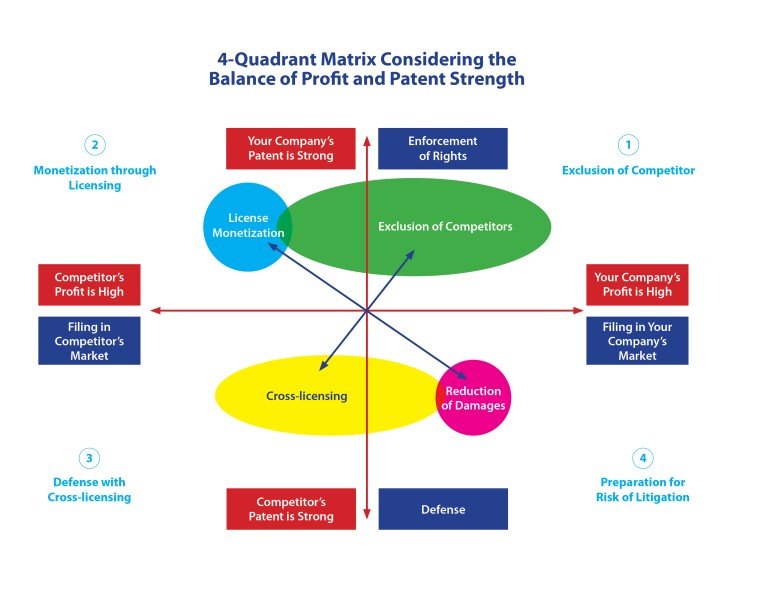
Figure 1. Patent filing objectives defined by patent marketing
A four-quadrant matrix considering both profit balance and patent strength balance, used to map filing purposes and form the basis of an IP strategy.
Filing objectives by quadrant
Active patent enforcement
If you aim for the upper-right quadrant, where both your profit and patent strength are high, you must build a patent portfolio aimed at excluding competitors. Because you want to block others in your market, patents should be filed first in your own market.
If you can identify production sites where competitor products that threaten your business may be manufactured, patents should also be filed in those locations to block manufacturing. In this quadrant, patents must cover competitors’ products.
In the upper-left quadrant, where strong patents can be obtained but competitors’ future profits are expected to exceed yours, monetization through licensing can be anticipated.
These patents must be filed in competitors’ markets so that competitors will “want” these patents. In manufacturing industries, over smaller competitors with lower profits and weaker patents, you will be in the upper-right quadrant. Still, in certain countries or product fields, you may fall into the upper-left quadrant over a larger corporation. In such cases, patents should be filed with the possibility of licensing in mind as well.
Patents in the upper-left quadrant must also cover competitor products. However, in cases where your products are manufactured under the competitor’s brand (OEM) or when you license your product to others to manufacture, the competitor's product becomes equivalent to your own. Thus, it is enough for the patent to cover your own product.
Licensing deals often require packaging patents with manufacturing know-how or facilities, again aligning competitor and own products. When a local subsidiary is used to repatriate profit through patent licensing, the subsidiary’s product equals your product.
Therefore, when licensing is anticipated, it is also important for patents to cover your own product. Describing expected embodiments and drafting claims covering them – introduced earlier – is useful for patent licensing.
Defense against patent enforcement
In the lower-left quadrant, where competitors’ profits are large, and your patent strength is weak, aggressive strategies are difficult – an imprudent assertion may provoke a much stronger counter-attack.
However, because the competitor enjoys large profits, even a small number of patents can be used to achieve defensive cross-licensing. The type of patent filing introduced at the beginning – filing to prevent being sued – is effective in this quadrant.
If the competitor does not need your patents, cross-licensing fails, so patents must be filed in the competitor’s market. If their manufacturing sites are limited, those sites also become subject to cross-licensing, so filing in production locations is also important. Patents must cover competitor products; whether they cover your own products is not relevant. These patents will eventually be cross-licensed against blocking patents in the upper-right quadrant.
In the lower-right quadrant, where your profits are larger, but competitor patents are stronger, litigation risk is high, and measures to reduce damages are necessary.
For example, if the potential counterparty is an NPE (non-practicing entity), your patents cannot be enforced against them, and because your business profits are large, you will always fall into this quadrant.
However, damage calculations consider the “contribution ratio” of the asserted patent. If your product uses many other patented technologies, you can argue that the asserted patent’s contribution is small. For this argument, you need patents covering your own products filed in your own markets. This type of filing is especially important in the U.S., where injunctions against NPEs are not granted. These patents counter licensing-target patents in the upper-left quadrant.
Summary of filing objectives
Summarizing patent marketing:
-
In the right-side quadrants, file in your markets first.
-
In the left-side quadrants, file first in competitor markets.
-
In the upper quadrants, the focus is on active enforcement.
-
In the lower quadrants, the focus is on defense against enforcement.
-
Claims should cover competitor products in the upper-right and lower-left, and your own products in the upper-left and lower-right quadrants.
How to conduct interviews with inventors
Clarifying patent objectives
Because the claims of a patent application depend on its purpose, inventor interviews must begin by discussing the patent’s objective based on patent marketing.
For excluding competitors or cross-licensing, the discussion should focus not on how your company will implement the invention, but on how competitors might design around it, and the application must protect against such workarounds.
Conversely, if monetization through licensing or reduction of damages is the goal, you should broadly discuss how your company implements the invention and reflect that in the claims and specification.
Filings for financing and shareholder communications
Sometimes, patents are filed to raise financing or demonstrate technological competence to shareholders. Even in such cases, the filing becomes more persuasive with the explanations of the patent utilization strategy based on patent marketing.
Patent strength
The importance of litigation strength – responses to non-infringement, invalidity or unenforceability arguments – also varies depending on the use of the patent.
When competitor exclusion is the goal, the competitor will vigorously fight the patent, so airtight preparation, including continuation applications, is necessary. However, for friendly licensing or financing, cost reduction may take priority over maximum patent strength. The number of claims, level of support in the specification and translation expenses depend on how much litigation strength should be prioritized over cost.
Clarifying your patent position and defining patent utilization strategy accordingly enables you to determine where and what to file, as well as the appropriate budget and level of detail for each application.
Anticipating future changes
Changing filing objectives
Patent strategies must be based not on the current but the future target patent position. If the patent position is expected to change over time, you can express the evolution of filing objectives over a timeline by defining 5-year and 10-year target positions. (Figure 2)
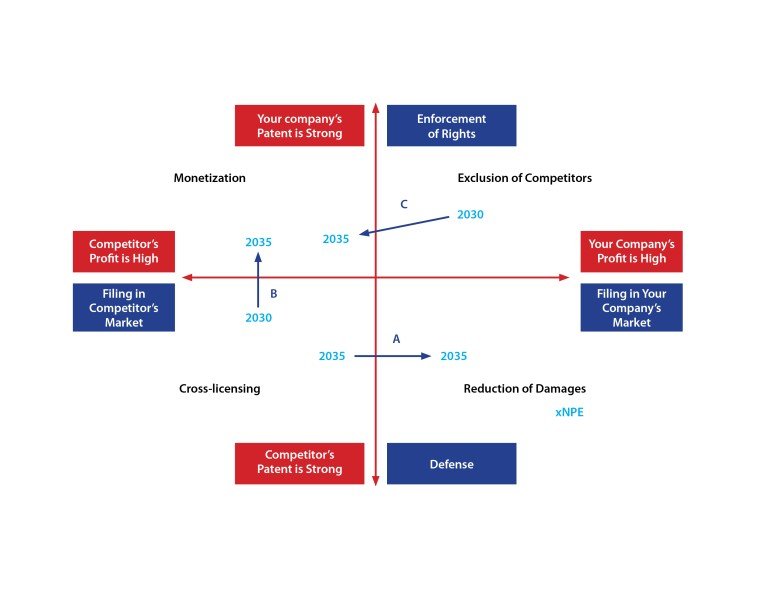
Figure 2: Visualizing changes in patent filing objectives using patent marketing
Filing objectives vary by competitor (A, B, C), product, and time. By creating 5-year and 10-year projections for each product and competitor, companies can incorporate these into their IP strategies.
For example, if competitor profits are expected to exceed your own over the next 10 years, shifting the target from exclusion to monetization, the diagram will illustrate this. In such cases, a filing strategy should accommodate both.
Assuming filing objectives will change over time allows you to set a continuation-filing strategy and maximize patent value.
Patent sales
When patents are sold, the “your company” in Figure 1 changes. As a result, patent positions and intended uses change drastically, and so does their value. Therefore, when considering the sale price, you must analyze patent positions from the buyer’s perspective.
Conclusion
Because patent marketing involves assumptions that are difficult to make, calculating exact numeric positions in the diagram is not very meaningful. However, without at least an intuitive sense of these positions, there is no basis for discussing what inventions to file and where, and the specification cannot be properly drafted.
Since patent filing is an investment, an exit scenario is indispensable. patent marketing provides a common language shared by R&D teams, IP departments, executives and investors. This will help companies build business strategies that fully leverage their technologies and accelerate both technological and business growth.
About the author

Law firms