Please wait while the page is loading...

loader

Platform liability in the age of downloadable manufacturing

31 July 2026

Platform liability in the age of downloadable manufacturing

Downloadable 3D printing is challenging traditional IP enforcement. Cathy Li examines how rights holders, platforms and licensing modelsareadapting to the rise of digital manufacturing.

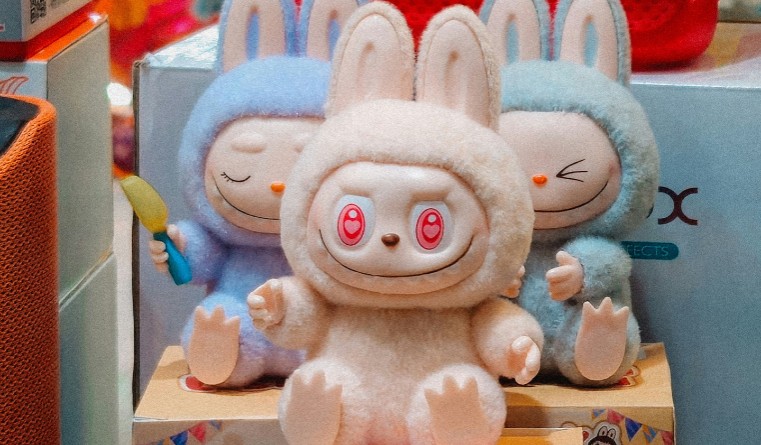
On a machine no larger than a sewing machine, a digital file can reproduce one of the most popular, toothy blind box crazes that encouraged everyone to hang one on their bags. That file, until recently, was available for free download on MakerWorld – an online library of 3D templates run by Bambu Lab, a leading Chinese manufacturer of consumer 3D printers. The platform hosts nearly 10 million monthly active users. And on it, users had been sharing unauthorized blueprints of various intellectual properties.

Chinese toy giant Pop Mart filed a lawsuit against Chinese 3D printer maker Bambu Lab, accusing the company of IP infringement after users widely shared Labubu Toy templates on its model-sharing platform MakerWorld.

What made the Pop Mart-MakerWorld dispute notable was because Pop Mart did not simply target individual counterfeit sellers; it went after the platform infrastructure that allowed the infringement to spread. In early March 2026, Pop Mart filed a copyright lawsuit against Bambu Lab and affiliated entities at the People’s Court of Pudong New Area in Shanghai, alleging that MakerWorld hosted user-uploaded 3D-printable files based on characters such as Labubu and Twinkle Twinkle, which users could download to print highly similar figurines using consumer 3D printers. The lawsuit raised a direct question about platform liability in user-generated 3D printing ecosystems.

For many rights holders, the speed of 3D printing presents a potential threat. 3D printing has evolved at a stunning pace over the past decade, offering extraordinary speed, but the cost trade‑off is still unavoidable for now.

“For a movie figurine, it used to take five months – two months for moulding, one for colour samples, two for production. By then, the movie is off the shelf. Now, our designer creates the main figure in seven hours, and 3D printing prints 31 blind boxes (8 cm) in 13 hours. So, in 20 hours, we can deliver 31 full‑colour figures. Compared to five months, it’s a revolution, but the price is higher,” said Steve Ng, founder of Tiny Micro Models, a local toy maker company in Hong Kong.

“A traditional blind box is around HK$60 (US$7). The cheapest 3D printed one? Around HK$200 (US$25). But the time savings, that’s the real revolution,” Ng added.

When the product becomes a file, enforcement stops being only about factories, importers and physical sellers. The first important event may now be the upload of a model, the second may be a remix of that model, and the third may be the sale of a printed object made from it. Each stage can matter. That changes the practical enforcement map.

“A rights holder who waits until thousands of physical prints are already in the market may be reacting too late,” said Reynaldo C. Barceló, a partner at Barceló, Harrison and Walker in Newport Beach, California.

A layered strategy is therefore needed. Rights holders must still rely on traditional legal protections such as copyright, trademarks, design rights (where available) and unfair competition laws where applicable, but they also need proactive detection systems to identify infringing files early, document their appearance, trace their spread and decide where to act. This is particularly relevant in the toy sector, where 3D printing is already a legitimate tool for development and prototyping – a dynamic that makes it all too easy for files to circulate under an innocent guise before turning commercial.

Platform liability

“The recent dispute involving Pop Mart and Bambu Lab illustrates the pressure point,” said Barceló.

Barceló noted that a workable remedy would likely pair sharper notice-and-takedown procedures, clear tagging of authorized versus unauthorized models, genuine repeat infringer enforcement, official brand channels and formal commercial licensing, preserving space for real hobbyists while making it harder for mass copying to pass as “community creativity.”

Labubu is no minor IP. The character surged to global fame in 2025, accounting for roughly 35-40 percent of Pop Mart’s total revenue. Chinese customs authorities alone seized about 1.8 million counterfeit Labubu products in 2025 (largely between January and mid‑year), underscoring the commercial stakes involved.

According to official platform data released by Bambu Lab, MakerWorld had roughly 10 million monthly active users and millions of user-uploaded models by the end of 2025, indicating that the alleged circulation of infringing Labubu files extended beyond an isolated act of copying.

When a company that has publicly emphasized strict enforcement is itself accused of enabling infringement, the case draws attention to the broader question of how to manage user-generated content at the scale at which these platforms operate.

Platforms like MakerWorld function as intermediaries, hosting large volumes of user-submitted designs while also serving as distribution channels for commercial content. The same features that make these platforms effective, ease of upload, global reach and rapid replication also make comprehensive oversight difficult. Even where platforms have formal policies in place, verifying the origin and licensing status of each file remains a complex task.

At the same time, expectations on these platforms are rising. Many rights holders have become more assertive. For companies such as Pop Mart, whose business relies on tightly controlled character designs and limited-edition collectibles, unauthorized reproduction carries direct commercial implications.

“Recently, issues regarding the MakerWorld platform under Tuozhu Technology and Pop Mart IP copyrights have drawn widespread attention and discussion from all sectors of society. This has caused impact and distress to Pop Mart and the vast number of users; we express our most sincere apologies to everyone,” said Tuozhu Technology (Bambu Lab) in a statement on Chinese social media Weibo. Files were taken down after the lawsuit was filed rather than proactively, a timing that legal observers have suggested could have weakened any reliance on safe harbour protection had the case proceeded to judgment.

In March 2026, Bambu Lab removed all user‑uploaded Labubu designs from its 3D printing platform and issued a public apology, ending a copyright dispute with Pop Mart over unauthorized printable files. The terms of the settlement, including any payment, were not made public.

The outcome is arguably as significant for what it sidestepped as for what it resolved. A court ruling against Bambu Lab might have reshaped how platform liability is understood in the context of 3D model sharing, with potential ripple effects well beyond China.

“It would not be surprising to see the relationship become more structured and more actively managed,” said Barceló.

This case is a warning to Asia’s 3D printing industry and a signal to the broader 3D printing industry across Asia. Platforms like MakerWorld built their massive user base partly on the appeal of printable pop culture content.


“When a platform hosts large volumes of user-uploaded models and also benefits from that activity, the old idea that it is simply a neutral host becomes harder to maintain. That does not mean every platform becomes liable, but it does mean courts and rights holders are more likely to ask what the platform knew, what warning signs were visible, and what tools it had available to respond,” said Barceló.

Rethinking licensing for digital files

The dispute showed a gap in current licensing models, which are built for traditional supply chains and mass production, not for environments where a single downloadable file allows end users to manufacture protected goods on demand. With strong IP portfolios and the legal capacity to sue, rights holders like Pop Mart are now confronting platform liability and user-generated content, pushing the industry toward a reckoning over how digital blueprints of trademarked and copyrighted works should be governed.

Several intermediaries may be involved in the process of 3D printing, from the creation and dissemination of the blueprint for 3D printing, the so-called object design or computer-aided designs (CAD) files, to the actual creation and dissemination of the 3D printed object. Even so, the role of intermediaries is likely to decrease as high-quality 3D scanners and printers become accessible to end users in their domestic environments, further decentralizing 3D printing.

The centre of these pressures is the changing status of design files. In earlier phases of the industry, 3D models circulated widely with relatively little oversight, often treated as extensions of maker culture. Today, they are increasingly tied to brand value, contractual licensing agreements and revenue streams. As companies with established IP portfolios – particularly in collectibles, entertainment and consumer products – enter the space, expectations around control and compliance have become stricter.

The enforceability of licensing models for character and IP owners depends on clear contractual terms, control over distribution channels, and jurisdictional enforcement conditions.

Vivien Chan, founding and senior partner at Vivien Chan & Co. in Hong Kong, said licences should clearly address downloading, modification, sharing of derivative works and printing, while clearly defining the scope of permitted community and commercial use. She added that carefully defined permissions are often more effective than blanket prohibitions, as they reduce uncertainty and encourage compliance.

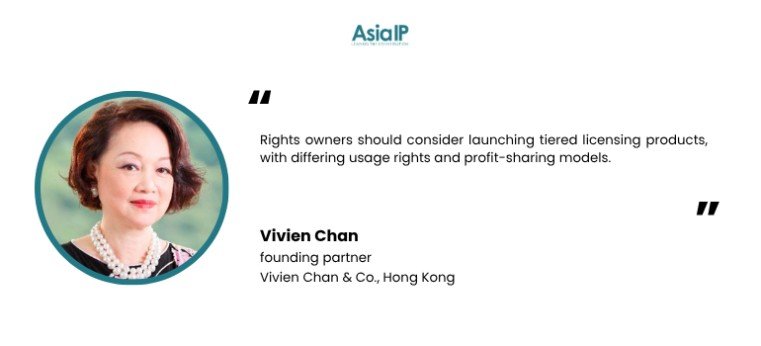
“Rights owners should consider launching tiered licensing products, with differing usage rights and profit-sharing models,” said Chan.

She explained that personal or non‑commercial licences permit use for private or non‑profit purposes; however, in practice, enforcement is limited and relies largely on voluntary compliance. Commercial licences, by contrast, allow use in revenue‑generating activities such as product sales, collaborations or advertising. These licences should define “commercial use” through specific actions, including the sale of printed items, volume limits, and approved distribution channels.

Turning to formats of use, Chan noted that file‑only licences restrict use to digital files and prohibit physical reproduction. Monitoring typically relies on technical measures, such as watermarking, encryption or usage logs, but enforcement becomes more difficult once files are distributed beyond authorized users, making audit provisions and pre‑defined damages particularly important. Print‑at‑home licences allow limited physical production for personal or small‑scale use; enforcement remains constrained, though unauthorized resale may still create legal liability. Service bureau licences permit production only through approved third‑party providers. This model enables greater oversight by centralizing manufacturing and allowing formal agreements with service providers, including mechanisms to ensure compliance and assign responsibility for unauthorized production.

“Licensing strategies should reflect how users actually interact with digital designs,” said Fandy Ip, a partner at Vivien Chan & Co. in Hong Kong. She further explained that licences should clearly address downloading, modification, sharing of derivative works and printing, including whether community modifications are permitted for non‑commercial purposes while commercial use is reserved to the rights holder.

Ip also pointed out that enforcement strategies must also evolve. Pursuing individual users is often impractical. Rights holders are therefore more likely to focus on platform‑level enforcement and cooperation with marketplaces and hardware ecosystems. Right owners should deploy artificial intelligence copyright monitoring systems on major 3D model platforms to automatically identify high-risk models (e.g., Labubu, Mario). They may prioritize addressing large-scale distribution and commercial sales, while adopting educational warnings rather than immediate takedowns for personal use.

Overall, effective adaptation may require rights holders to balance reduced direct control with clearer compliance mechanisms and more sustainable ways of monetizing digital and community‑driven use.

As products increasingly take the form of digital files, modifiable designs or distributed 3D-printed outputs, rights holders may need to adjust their IP and licensing strategies accordingly. Control can no longer focus only on finished physical goods. Instead, greater emphasis should be placed on copyright and design rights in the digital files themselves, supported by clear contractual terms, as these directly govern copying, modification and distribution.

The emerging framework for IP governance

From a legal perspective, the rapid democratization of consumer-grade 3D printing is poised to reshape the relationship among intellectual property owners, hardware manufacturers and user-generated content platforms. What has traditionally been an enforcement-heavy approach to IP protection is likely to evolve into a more structured and cooperative framework. Rights holders are increasingly expected to shift toward controlled participation models, including the development of authorized design libraries, paid licensing schemes and subscription-based access tied directly to verified ownership.

At the same time, hardware manufacturers will likely continue to position themselves as neutral technology providers. However, competitive pressures and the need to attract major licensors may drive the integration of rights-management capabilities at the device level. These could include embedded watermarking systems, traceable metadata and firmware-based compliance notifications, all designed to make IP tracking and enforcement more seamless without fundamentally altering the manufacturers’ intermediary stance.

User-generated model platforms, meanwhile, are expected to take on a more formalized intermediary role. Rather than operating as passive hosting services, these platforms may evolve into licensed marketplaces with clearly defined governance structures. Enhanced content moderation protocols, standardized takedown procedures and transparent revenue-sharing arrangements could become baseline expectations as platforms seek to balance user creativity with legal compliance.

Anna Mae Koo, a partner at Vivien Chan & Co. in Hong Kong, explained that as both industry stakeholders and regulators explore more efficient and equitable methods of IP exploitation in this space, several emerging frameworks and standards are likely to play a central role.

There is a growing discussion around the adoption of unified technical specifications for digital watermarks and metadata in 3D model files.

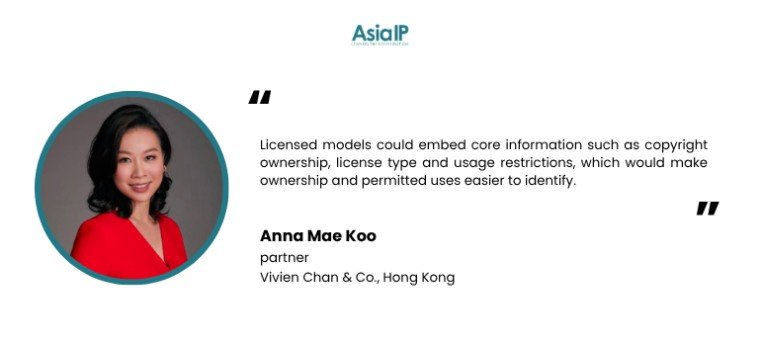
“Licensed models could embed core information such as copyright ownership, licence type and usage restrictions, which would make ownership and permitted uses easier to identify,” said Koo.

Standardized, tiered licensing frameworks are also expected to emerge, particularly through major platforms. These templates would delineate the scope of permissible use across different contexts, including noncommercial applications, personal printing, commercial exploitation and large-scale production. By establishing clear revenue-sharing models and dispute resolution mechanisms, such agreements could reduce transaction costs and streamline negotiations, ultimately making IP licensing more accessible and efficient.

3D printing platforms are likely to face increasing incentives to implement robust governance systems for handling infringing content. Industry-driven mechanisms may provide structured channels for submitting infringement notices, managing takedown requests and resolving disputes between rights holders and users. These frameworks would help clarify compliance obligations and establish more predictable standards for content moderation across the ecosystem.

The intersection of artificial intelligence and 3D modelling introduces additional legal complexity, particularly in relation to copyright infringement. In response, IP-focused filtering mechanisms could be integrated into AI design tools to prevent the generation of protected characters, designs or other recognizable elements. By addressing infringement risks at the point of creation, such measures may help balance the advancement of AI technologies with the protection of existing IP rights, while fostering a more equitable environment for original creators.

It is within this environment that the Pop Mart case stands out. The significance lies partly in the identity of the defendant. Bambu Lab had, until recently, presented itself as an advocate for stricter enforcement of intellectual property rights.

In October 2025, its MakerWorld platform filed legal claims against competing repositories, alleging that thousands of design files had been copied and redistributed without authorization, at times under impersonated creator accounts. The company characterized the issue as widespread infringement and emphasized its enforcement mechanisms, including reporting systems aligned with the Digital Millennium Copyright Act and the EU Copyright Directive.

Taken together, these developments suggest the industry is moving toward new operating models for digital manufacturing. Platforms are experimenting with creator compensation systems and curated model libraries, while facing pressure to strengthen content governance. Meanwhile, the legal scrutiny reflected in the Pop Mart case signals that courts and regulators are beginning to grapple with how intellectual property rules should apply in an environment where physical goods can be reproduced directly from downloadable files at scale.


Law firms