

Traditional knowledge as IP
31 March 2026
Admittedly, Republic Act No. 8293, the Intellectual Property Code of the Philippines, is notably silent on the specific issue of traditional knowledge. Thus, genetic resource and traditional knowledge of indigenous cultural communities and indigenous peoples in the Philippines remain to be inadequately protected.
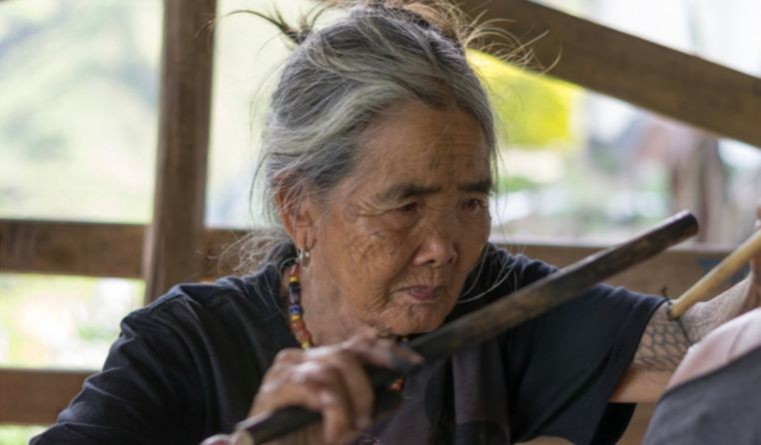
A case in point is the dispute between Nas Academy, an online learning platform, and the legendary Kalinga tattoo artist Whang-od Oggay, who is also known as Apo Whang-Od and Maria Oggay. The dispute centres on the unauthorized commercialization of the ancient art of batok, a traditional tattooing practice of the Kalinga people in northern Luzon. A practitioner, known as a mambabatok or mambatek, performs the tattooing using a specialized hand-tapping method. At 109 years old, Whang-od is widely considered to be the oldest living mambabatok.
In 2021, the online learning platform launched a “Whang-Od Academy” course, claiming it had secured a thumbprint contract from the artist to teach her traditional tattooing techniques. However, her family and the Butbut indigenous community quickly denounced the project as a “scam,” asserting that Whang-od did not fully understand the nature of the agreement and that no community consent had been granted.
Following an investigation into the controversy, the National Commission on Indigenous Peoples (NCIP) determined that the contract between Nas Academy and Apo Whang-od was “grossly onerous” and lacked her valid consent. NCIP’s findings revealed that the contract granted Nas Academy exclusive, perpetual ownership of Whang-od’s likeness and voice, including the right to alter or transfer these assets without further permission. Nas Academy refuted these claims, asserting that the terms were explained to Whang-od through a translator and that she would receive shared revenue. However, the NCIP noted a significant disparity between the thumbmark on the contract and one provided by Whang-od during their validation process.
This high-profile conflict eventually led to a formal apology from Nas Academy and the total scrapping of the course. The reconciliation between Nas Academy, Whang-od, and the Butbut Indigenous Cultural Communities/Indigenous Peoples (ICCs/IPs) was a formal, customary event arranged by the NCIP, held in October 2021 in Barangay Buscalan, Kalinga. During the meeting, Nas Academy representatives personally apologized to Whang-od, her family, and tribal elders for the “misunderstanding” surrounding the online course. While accepting the apology, tribal leaders emphasized that the art of tattooing is a collective tradition that requires following community procedures. A key outcome was the formal declaration by Nas Academy’s legal counsel that Whang-od’s contract was null and void. The event ended with a shared meal, a traditional gesture symbolizing healing and reconciliation according to the customs and tradition of the Butbut ICCs/IPs.
While the Whang-od case exposed the predatory use of contracts to exploit cultural heritage without the community’s real consent, the Philippine government is now attempting to proactively manage the digitization of traditional knowledge through official channels.
Traditional knowledge, as defined by the World Intellectual Property Organization, is “knowledge, know-how, skills and practices that are developed, sustained and passed on from generation to generation within a community, often forming part of its cultural or spiritual identity.” While WIPO notes that innovations derived from this knowledge can theoretically be protected by patents, trademarks, geographical indications or trade secrets, the practical application remains flawed. In practice, conventional intellectual property systems often fail to account for the unique nature of traditional knowledge, and are simply ill-equipped to safeguard it.
In the Philippines, the Constitution serves as the primary legal anchor for the recognition of traditional knowledge. This is embodied in Article XIV, Section 17, whereby the state explicitly commits to recognizing, respecting and protecting the rights of indigenous cultural communities to preserve and develop their cultures, traditions and institutions. This constitutional directive ensures that traditional knowledge, whether expressed through ancestral medicines, sustainable farming practices or sacred weaving patterns, for example, is not merely a historical artefact, but a protected right integrated into the national development framework. By embedding these rights in the Constitution, the Philippines acknowledges that the intellectual and cultural heritage of its indigenous peoples is essential to the country’s collective identity and must be protected against unfair exploitation.
The most significant shift in traditional knowledge (TK) protection in recent years is the WIPO Treaty on Intellectual Property, Genetic Resources, and Associated Traditional Knowledge, adopted in Geneva on May 24, 2024. This treaty aims to modernize the patent system by increasing transparency and quality regarding genetic resources. By establishing stricter standards for novelty, the framework aims to cease the grant of patents for innovations that improperly claim traditional knowledge as their own. It introduces a mandatory disclosure requirement where applicants must identify the country of origin or the specific source of any genetic resources used. Furthermore, if the invention is based on traditional knowledge, applicants are required to name the Indigenous Peoples or local community that provided that knowledge or disclose its source. The Philippines is a firm supporter of this ground-breaking treaty, joining 192 other WIPO member states in its adoption. Then-IPOPHL Director General Rowel S. Barba noted that the treaty recognizes the rights of indigenous communities over their resources and knowledge, which are considered national cultural treasures. Following this historic consensus, IPOPHL plans to recommend the treaty’s ratification to the Office of the President to formally establish it as a nationwide policy.
Years before the 2024 WIPO Treaty, the Philippines had already begun utilizing a similar mechanism through a joint administrative order between IPOPHL and the NCIP. Joint IPOPHL-NCIP Administrative Order No. 01, Series of 2016 serves as the legal foundation for protecting indigenous heritage in the Philippines. It introduces the concept of community intellectual rights, recognizing that traditional knowledge and practices are collective properties belonging to indigenous communities rather than individuals. To safeguard these rights, the order mandates that any intellectual property application using such knowledge must disclose its source and geographical origin. Furthermore, it strictly requires proof of free and prior informed consent (FPIC), ensuring that indigenous groups maintain control over their cultural assets and are protected from unauthorized commercial exploitation. This framework effectively prevents the misappropriation of traditional innovations by making transparency and community approval a prerequisite for legal protection.
The Philippines’ commitment to preserving indigenous heritage also extends deeply into the healthcare sector through Republic Act No. 8423, otherwise known as the Traditional and Alternative Medicine Act (TAMA) of 1997. This law explicitly recognizes the right of indigenous societies to own their knowledge of traditional medicine and mandates that they receive a share of any financial returns from its commercial use. By establishing the Philippine Institute of Traditional and Alternative Health Care (PITAHC), the state ensures that these ancient healing practices are not only preserved and scientifically validated but also shielded from unwarranted exploitation.
House Bill No. 3940, pending legislation which seeks to formalize the inclusion of traditional knowledge, cultural expressions and genetic resources under the protection of the IP Code, was introduced in 2025. This proposed measure secures the rights of indigenous cultural communities to control, develop and protect their intellectual activity. A critical update in the bill is the mandatory disclosure requirement, which forces patent applicants to provide a document showing the free and prior informed consent (FPIC) of the concerned indigenous peoples if an invention is based on their resources or knowledge. Applicants must also disclose the specific source or geographical location of the materials used. Furthermore, the bill grants indigenous groups the exclusive right to authorize or prevent the exploitation of their heritage, including the power to withdraw consent if it proves detrimental to their socioeconomic life or cultural integrity. By establishing this framework, the measure ensures that traditional knowledge is treated as a collective right, allowing these communities to direct how their cultural heritage is used and developed.
On December 16, 2025, the NCIP officially launched the Data Repository on Indigenous Peoples (DRIP), the first-ever centralized system designed to store, manage and access vital information on Indigenous Cultural Communities/Indigenous Peoples (ICCs/IPs). The platform incorporates a rigorous four-stage process that begins with the systematic collection of information and moves into a critical verification and validation phase to ensure cultural accuracy and community authorization. Once data is verified, it is securely stored and organized to facilitate structured access and reporting. Organized according to the four bundles of rights under the Indigenous Peoples Rights Act of 1997, DRIP guarantees that all gathered data is reliable, secure and officially validated. This platform replaces outdated, redundant records with a streamlined system that improves data quality and provides the rapid insights needed for effective policy-making and community development.
In fact, DRIP recently gained international recognition at the GovInsider Festival of Innovation 2026 in Singapore, where it was distinguished with the Digital Government Award in the Whole of Government category. This honour also acknowledges the dedicated efforts of NCIP personnel on the ground, whose diligent work in gathering and validating indigenous peoples’ data ensures that the repository stays true to the current traditions and needs of ICCs/IPs, making it a trusted tool for responsive governance. This centralized database will allow the NCIP to provide streamlined services, enhanced policies, responsive programmes and data-driven decisions supported by a centralized repository, ensuring that the rights of Indigenous Peoples are strictly upheld, not just documented.
Indeed, in the Philippines, significant strides have been made in reclaiming control over the nation’s cultural assets, and the government is gradually beginning to fill the systemic gaps in an intellectual property system ill-equipped to handle the nuances of traditional knowledge. However, much work remains to be done. Despite its immense potential for innovation and sustainable development, traditional knowledge has long remained vulnerable to exploitation.
This is not merely a matter of policy, but a fulfilment of the 1987 Constitution, which mandates the state to protect the rights of indigenous communities to preserve and develop their own institutions. By integrating procedural safeguards like FPIC directly into the IP Code, the government moves closer to a system where cultural heritage is a legally protected asset rather than one vulnerable to misappropriation or exploitation. The ultimate goal is to give the constitutional promise of cultural integrity the full force of the law, and to ensure that indigenous communities are the true gatekeepers of their legacy.
About the author



Law firms