

Hong Kong’s luxury for less
15 July 2025
Hong Kong has a well-earned reputation for selling luxury goods at tempting discounts. But as Cathy Li reports, the parallel import market can be fraught with risk.
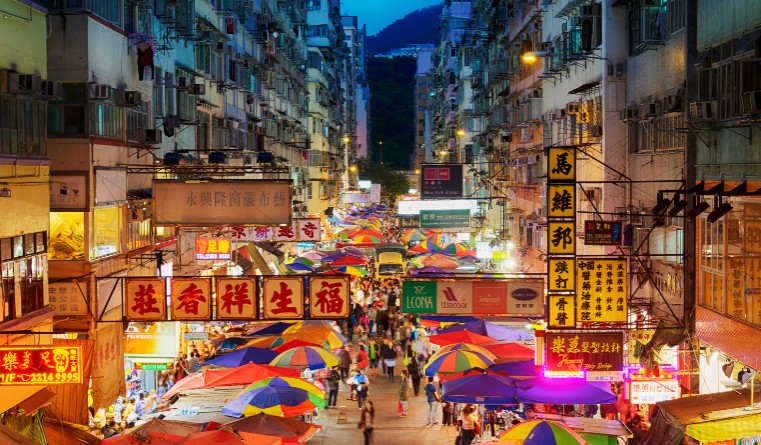
The neon glow of Hong Kong’s shopping districts pulses with promise. Inside SaSa’s crowded aisles, tourists and locals jostle over Chanel serums priced 30% below mall rates. A few streets over, electronics stalls in Sham Shui Po hawk Sony headphones and Dyson Airwraps at dizzying discounts, their packaging just slightly off – missing serial numbers, bearing foreign labels or wrapped in a suspicious sheen.
Luxury brands here sell at tempting discounts, but caution is key: alongside genuine parallel imports, one might find damaged stock, improper storage, and counterfeits.
On May 13 and 15, 2025, Hong Kong Customs raided shops in Kwun Tong and Sham Shui Po, seizing 3,300 counterfeit phones and accessories worth HK$4.25 million (US$544,000) – just a sliver of the grey market tide flooding the city. Nine people, from shop owners to sales staff, were arrested and later released on bail. Yet by dawn, the cycle resumed: shutters rolled up, discounted goods restocked, and shoppers none the wiser.
A tourist posted on Red Note, a Chinese social media platform, saying that while “SaSa does not sell counterfeits,” the same might not be true for many pharmacies in Hong Kong. She claimed she had purchased a fake Dior lipstick, noting that when compared to a genuine one, the scent and texture were noticeably different.
The Hong Kong Customs and Excise Department warned consumers to purchase goods only from reputable retailers and to verify product authenticity with trademark owners or authorized agents when in doubt. Parallel imports typically lack manufacturer warranties, after-sales service, and quality assurances, and may include expired, tampered, or improperly stored goods. In some cases, the presence of high-quality counterfeits in the same market further blurs the line between legitimate bargains and potential hazards, leaving consumers vulnerable to both financial loss and safety concerns.
“Traders should also be cautious in merchandising since the sale of counterfeit goods is a serious crime and offenders are liable to criminal sanctions,” the department said in a press release.
How can these products be so cheap?
The answer lies in Hong Kong’s unique approach to parallel imports – a system that prioritizes free-market access over brand control, but also creates opportunities for abuse.
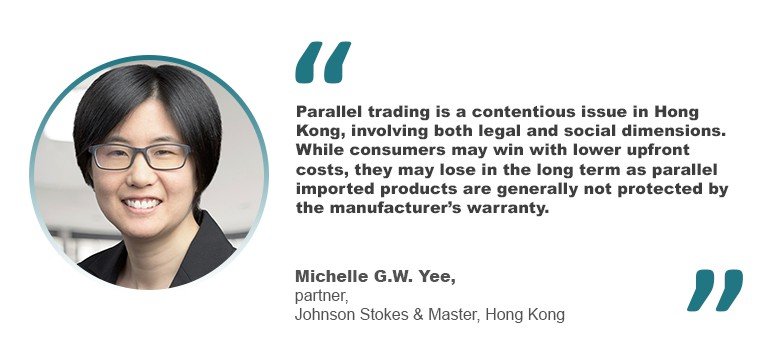
“Parallel trading is a contentious issue in Hong Kong, involving both legal and social dimensions,” said Michelle G.W. Yee, partner at Johnson Stokes & Master in Hong Kong. She noted that the existing legal framework dates back to the 1990s, a time when the former Trade and Industry Bureau described the globalization of trade as an “irreversible trend” in a published paper. At that time, Hong Kong’s core economic policy emphasized free trade and open markets. Imposing restrictions on parallel imports, she explained, would interfere with market dynamics by artificially inflating prices.
Nowadays, the draw is irresistible for budget-conscious shoppers and tourists. The city’s thriving parallel import trade has long been a magnet for bargain hunters. While the term gained prominence more recently, the practice can be traced back to the 1970s and 1980s, when traders began sourcing Japanese electronics like cameras and cassette players directly from Japan, bypassing official distributors. These products were often cheaper or released earlier in Japan, making them popular with local consumers and tourists. Since then, the trade has evolved into a vast grey market spanning French cosmetics, German appliances and more. While the trade operates legally, its scale and lack of oversight have also made it a conduit for illicit activity.
In late 2024, Hong Kong Customs intensified its crackdown on counterfeit goods, seizing more than 74,700 items worth HK$14.9 million (US$1.9 million) in a single raid at the Tuen Mun River Trade Terminal in October. The following month, authorities confiscated 15,000 counterfeit products – including clothing and skincare – from an online seller, valued at HK$2 million (US$256,000). In December, Operation Santa Guardian uncovered another 43,000 fake and smuggled items worth HK$17 million (US$2.2 million), underscoring the vast scale and persistence of the city’s gray market.
Customs officials have stepped up enforcement against counterfeit operations, but the sheer volume of grey-market goods – now facilitated by real-time price-tracking apps and encrypted chat groups – makes regulation difficult. Some traders have adapted by shifting to smaller, high-value items like AI components or rare pharmaceuticals, while others recruit travelers as unsuspecting couriers, according to Hong Kong Trade Development Council.
For now, the bargains remain irresistible to many. But as the market grows more complex, experts warn that buyers – and brands – may pay the price in the long run.
“While consumers may ‘win’ with lower upfront costs, they may ‘lose’ in the long term as parallel imported products are generally not protected by the manufacturer’s warranty,” said Yee.
Hong Kong’s laissez-faire stance on parallel imports, rooted in the Trade Marks Ordinance (Cap. 559), permits the resale of genuine trademarked goods that were lawfully sold abroad, under the principle of international exhaustion. This legal framework allows parallel-imported products to enter the market freely, often at lower prices than those sold through authorized channels. However, this openness comes with consumer risks.
“Grey market products are sourced outside authorized distribution channels, which often means they do not come with the warranty and after-sales support and services which would normally be included with products purchased from authorized distribution channels,” said Yee, emphasizing that it becomes particularly problematic with high-value items like appliances, where warranties and after-sales services are typically a key part of the product’s overall value. Without access to authorized repair centers, genuine replacement parts, or technical assistance, consumers may be forced to turn to unofficial service providers – often at greater cost and inconvenience – undermining any initial savings.
For brands, it’s a battle for control. Authorized distributors, who invest in local marketing and customer care in contrast to grey-market sellers who undercut prices without sharing the costs of R&D or brand prestige. Recent court cases, like Miele v. Instant Services, reveal how far some importers go – repackaging goods, forging warranties, and even impersonating official dealers – leaving courts to weigh trademark rights against consumer access.
Counterfeits disguised as parallel imports
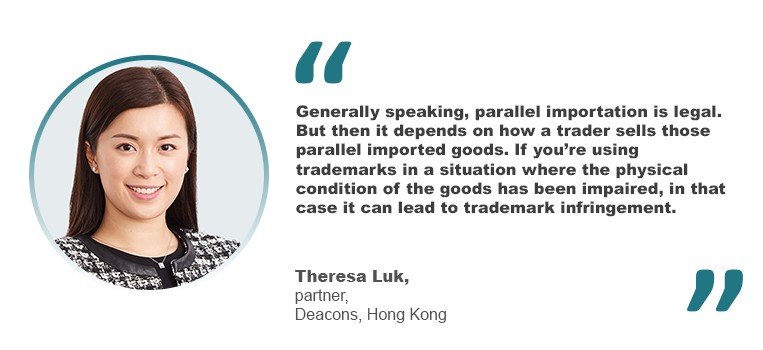
“Generally speaking, parallel importation is legal. But then it depends on how a trader sells those parallel imported goods,” said Theresa Luk, a partner at Deacons law firm in Hong Kong. She explained that the way traders use the original brand owner’s intellectual property can lead to trademark infringement.
“If you’re using trademarks in a situation where the physical condition of the goods has been impaired, then in that case it can lead to trademark infringement,” she said. “Or there could be copyright infringement as well, if the brand owner’s promotional materials have been used, or if the sales practice is conducted in a misleading manner, that could amount to passing off.”
A 2024 Hong Kong High Court ruling in favor of German appliance maker Miele reinforced these concerns. The court found that Instant Services (Hong Kong) Ltd., a parallel importer, had engaged in deceptive practices – including relabeling products and misrepresenting distributor information – amounting to trademark infringement, passing off and copyright violation. Notably, the company’s sole director was held personally liable as a joint tortfeasor.
While Hong Kong’s trademark laws generally permit parallel imports under the principle of exhaustion of rights, the Miele case illustrates that misleading conduct – such as altering product labels or falsely implying authorization – can strip away legal protections and result in significant liability. The court emphasized that the importer had misled consumers by using Miele’s official contact details and warranty terms, falsely presenting itself as an authorized dealer. Additionally, modifying the condition of the appliances risked damaging Miele’s brand integrity, further supporting the infringement ruling.
“The brand owner, importer and retailer may all potentially be liable for a defective parallel import, depending on the nature of the defect and harm caused,” said Yee. When parallel imported products cause harm, liability for harm can depend on nature of harm and jurisdiction.
The risks extend beyond legal liability, with counterfeiters exploiting the parallel import market. “There are counterfeits that are disguised as parallel imports by some online traders,” said Luk. She points out earlier last year, customs took action against some online traders that sold luxury cosmetics and perfumes online that were counterfeits but disguised as parallel imports.
“Honestly, who doesn’t like to enjoy a discount on products, especially luxury products? But also traders who are trying to benefit from the price difference between different markets,” Luk said.
While some claim parallel goods are authentic, this isn’t universally true. Product type matters, particularly for items needing meticulous handling. Improper storage or transportation can damage these goods, ultimately harming both brand owners and authorized distributors when they enter the market.
Hong Kong’s glittering promise of luxury for less comes with hidden costs. The city’s thriving parallel import market, fueled by decades of free-trade policies, offers tantalizing discounts but operates in a legal gray zone where genuine bargains coexist with counterfeits and compromised goods. While shoppers celebrate slashed prices on Chanel serums and Dyson stylers, others risk purchasing damaged, expired or outright fake products that undermine both consumer safety and brand integrity.
In the end, the neon-lit hunt for bargains reflects a deeper truth: in a globalized market, price and value are not always the same. As parallel imports and counterfeits grow more sophisticated, buyers and brands alike must navigate a landscape where the real cost of a “discount” may only become clear long after the purchase.