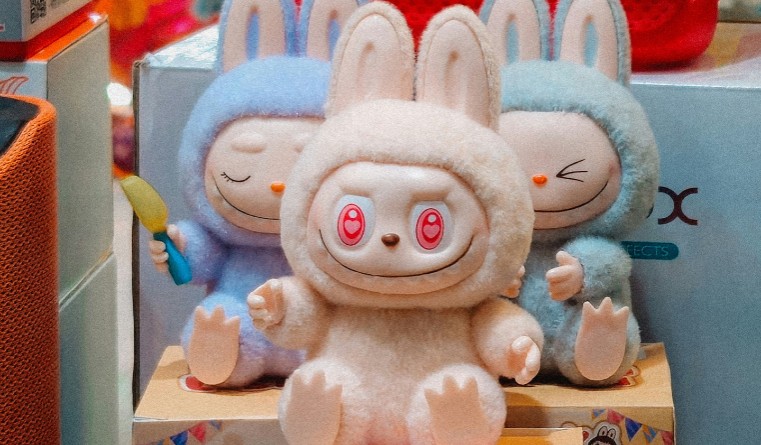
“For a movie figurine, it used to take five months – two months for moulding, one for colour samples, two for production. By then, the movie is off the shelf. Now, our designer creates the main figure in seven hours, and 3D printing prints 31 blind boxes (8 cm) in 13 hours. So, in 20 hours, we can deliver 31 full‑colour figures. Compared to five months, it’s a revolution, but the price is higher,” said Steve Ng, founder of Tiny Micro Models, a local toy maker company in Hong Kong.
“A traditional blind box is around HK$60 (US$7). The cheapest 3D printed one? Around HK$200 (US$25). But the time savings, that’s the real revolution,” Ng added.
When the product becomes a file, enforcement stops being only about factories, importers and physical sellers. The first important event may now be the upload of a model, the second may be a remix of that model, and the third may be the sale of a printed object made from it. Each stage can matter. That changes the practical enforcement map.
“A rights holder who waits until thousands of physical prints are already in the market may be reacting too late,” said Reynaldo C. Barceló, a partner at Barceló, Harrison and Walker in Newport Beach, California.
A layered strategy is therefore needed. Rights holders must still rely on traditional legal protections such as copyright, trademarks, design rights (where available) and unfair competition laws where applicable, but they also need proactive detection systems to identify infringing files early, document their appearance, trace their spread and decide where to act. This is particularly relevant in the toy sector, where 3D printing is already a legitimate tool for development and prototyping – a dynamic that makes it all too easy for files to circulate under an innocent guise before turning commercial.
Platform liability
“The recent dispute involving Pop Mart and Bambu Lab illustrates the pressure point,” said Barceló.
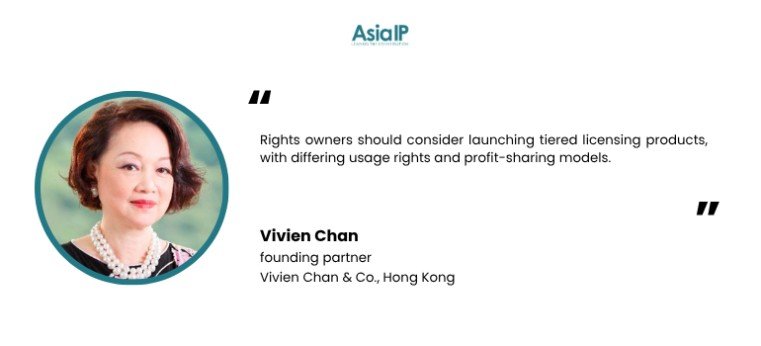
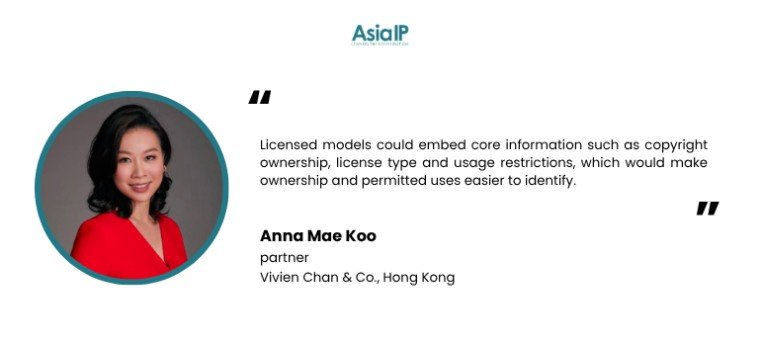
Barceló noted that a workable remedy would likely pair sharper notice-and-takedown procedures, clear tagging of authorized versus unauthorized models, genuine repeat infringer enforcement, official brand channels and formal commercial licensing, preserving space for real hobbyists while making it harder for mass copying to pass as “community creativity.”
Labubu is no minor IP. The character surged to global fame in 2025, accounting for roughly 35-40 percent of Pop Mart’s total revenue. Chinese customs authorities alone seized about 1.8 million counterfeit Labubu products in 2025 (largely between January and mid‑year), underscoring the commercial stakes involved.
According to official platform data released by Bambu Lab, MakerWorld had roughly 10 million monthly active users and millions of user-uploaded models by the end of 2025, indicating that the alleged circulation of infringing Labubu files extended beyond an isolated act of copying.
When a company that has publicly emphasized strict enforcement is itself accused of enabling infringement, the case draws attention to the broader question of how to manage user-generated content at the scale at which these platforms operate.
Platforms like MakerWorld function as intermediaries, hosting large volumes of user-submitted designs while also serving as distribution channels for commercial content. The same features that make these platforms effective, ease of upload, global reach and rapid replication also make comprehensive oversight difficult. Even where platforms have formal policies in place, verifying the origin and licensing status of each file remains a complex task.
At the same time, expectations on these platforms are rising. Many rights holders have become more assertive. For companies such as Pop Mart, whose business relies on tightly controlled character designs and limited-edition collectibles, unauthorized reproduction carries direct commercial implications.
“Recently, issues regarding the MakerWorld platform under Tuozhu Technology and Pop Mart IP copyrights have drawn widespread attention and discussion from all sectors of society. This has caused impact and distress to Pop Mart and the vast number of users; we express our most sincere apologies to everyone,” said Tuozhu Technology (Bambu Lab) in a statement on Chinese social media Weibo. Files were taken down after the lawsuit was filed rather than proactively, a timing that legal observers have suggested could have weakened any reliance on safe harbour protection had the case proceeded to judgment.
In March 2026, Bambu Lab removed all user‑uploaded Labubu designs from its 3D printing platform and issued a public apology, ending a copyright dispute with Pop Mart over unauthorized printable files. The terms of the settlement, including any payment, were not made public.
The outcome is arguably as significant for what it sidestepped as for what it resolved. A court ruling against Bambu Lab might have reshaped how platform liability is understood in the context of 3D model sharing, with potential ripple effects well beyond China.
“It would not be surprising to see the relationship become more structured and more actively managed,” said Barceló.
This case is a warning to Asia’s 3D printing industry and a signal to the broader 3D printing industry across Asia. Platforms like MakerWorld built their massive user base partly on the appeal of printable pop culture content.