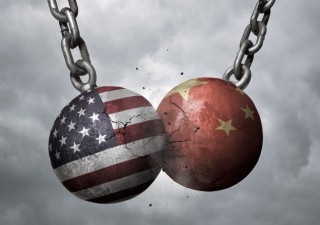
China has unveiled a new five-year intellectual property policy document, releasing the 15th Five-Year Plan (2026-2030) for Intellectual Property Protection and Utilization, a roadmap expected to shape patent, trademark, copyright and IP utilization strategies across the country for the remainder of the decade. The plan, issued by the State Council and highlighted by the China National Intellectual Property Administration (CNIPA) in early August, places particular emphasis on emerging technologies, international competitiveness and IP protection and application.
For multinational companies and Chinese technology firms alike, the significance of the plan lies not merely in its policy ambitions but in the specific IP reforms and measures it proposes. Among the priorities identified are stronger IP protection in emerging sectors, including artificial intelligence and algorithms. The document also calls for stronger protection in cross-border contexts and improved mechanisms for responding to overseas IP disputes.
The timing is notable. According to CNIPA, the number of valid invention patents held on the Chinese mainland reached 5.32 million by the end of 2025.
One of the most closely watched provisions concerns IP in emerging digital sectors. The plan includes a special project on the two-way empowerment of IP and AI and calls for continued efforts to improve IP protection in emerging fields.
The document also emphasizes IP utilization, calling for stronger patent navigation, improved IP financing tools, technology transfer mechanisms and commercialization platforms to help move inventions from laboratories into the market.
Another major theme is international competitiveness. The plan specifically identifies stronger cross-border IP protection and deeper international IP cooperation. It proposes improving foreign-related IP protection systems and strengthening protection for Chinese companies’ interests overseas.
Several law firms have already begun analysing what the new roadmap could mean in practice. Aaron Wininger, a principal and director of China IP law practice at Schwegman Lundberg & Woessner, has also examined China’s separate 2026 IP policy agenda, which includes measures concerning trade secrets, plant varieties, customs IP protection and emerging IP rules.
The publication of the plan also comes only weeks after China’s revised Trademark Law was adopted and scheduled to take effect on January 1, 2027. Firms including Mayer Brown, Deacons and Gowling WLG have published analyses of the revised trademark regime, highlighting stricter regulation of bad-faith filings, stronger enforcement mechanisms and greater emphasis on genuine commercial use of rights.
Gabriela Kennedy and Olivia Ma of Mayer Brown described the revised trademark framework as being focused on “combating bad-faith filings while also strengthening genuine use requirements, anti-abuse enforcement, and protection for well-known brands.”
Meanwhile, Deacons partners Catherine Zheng, Dora Si, Tracy Li and Eva Tao argued that the emerging framework is likely to enhance protection for both domestic and international brand owners, particularly through stronger measures addressing bad-faith registrations and the protection of well-known trademarks.
The plan also links IP policy to broader industrial goals, including support for “new quality productive forces,” a term used to describe innovation-driven economic development.
For rights holders, the roadmap signals a future in which IP plays an even larger role in economic growth, technological competition and international business strategy. While many implementation details remain to be finalized, the plan points to stronger IP protection and utilization as part of China’s broader economic and innovation strategy.
- Asia IP