


More than just a picture: Graphical user interfaces as patentable subject matter in Russia
26 November 2026

Driven by rapid digital transformation, the graphical user interface (GUI) has evolved from a superficial aesthetic layer into a sophisticated system of visual communication. Today’s interface is no longer a static image; it is an interactive tool whose efficiency directly dictates user experience and a project’s commercial success. For developers of digital solutions, ranging from mobile apps to high-tech ecosystems, original GUI design stands as a cornerstone of market competitiveness.
Possessing independent commercial value, a GUI requires comprehensive legal protection. Since its uniqueness lies primarily in its visual features, registration as an industrial design serves as the most effective instrument of protection.
The practice of protecting GUIs as industrial designs in Russia dates back approximately two decades, tracing its roots to 2005-2006 with the issuance of the earliest design patents of this kind:
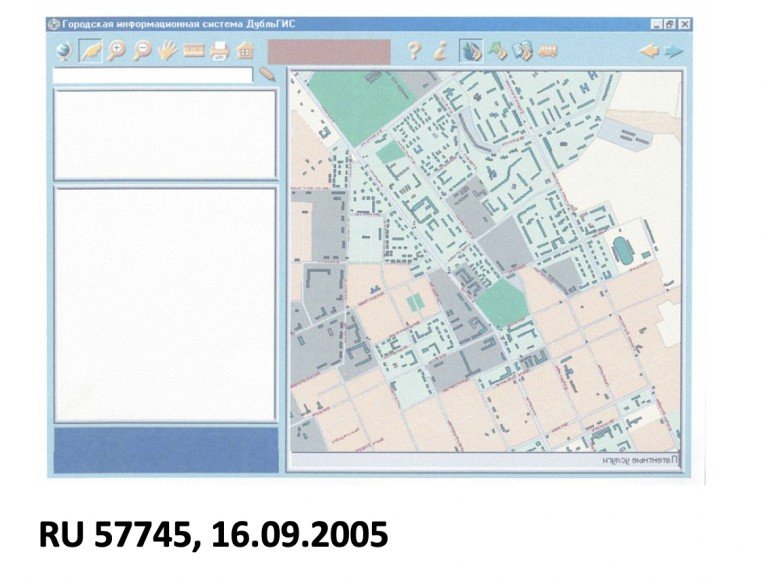
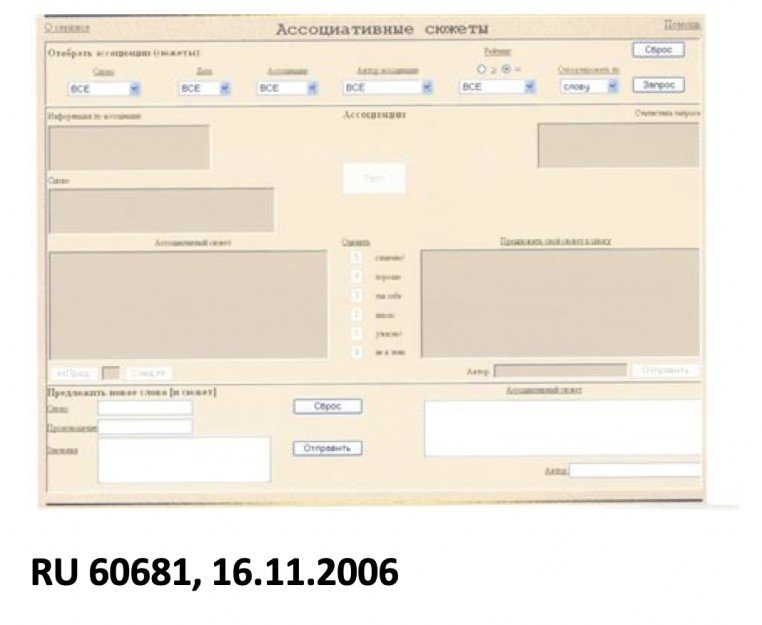
For a long time, Russian legislation lacked a specialized legal framework for GUIs, meaning their protection relied on general statutory provisions. Pursuant to Article 1352(1) of the Civil Code of the Russian Federation, an industrial design protects “a solution defining the external appearance of an article of industrial or handicraft manufacture”. Furthermore, Clause 32 of the administrative Requirements clarifies that an “article” encompasses both the object as a whole and any independent, distinct part visible during normal operation. These very provisions form the foundation of GUI patent protection in Russia: the interface is legally treated as an independent part of an electronic device’s appearance (such as a smartphone, monitor, or tablet), while the screen serves as its physical medium.
The flexibility demonstrated by the Russian Patent Office (Rospatent) when examining GUI industrial design applications significantly empowers applicants in shaping their legal protection strategies. Since Russian law does not mandate displaying the entire article when patenting an independent part thereof, two primary strategies for preparing graphical materials have emerged.
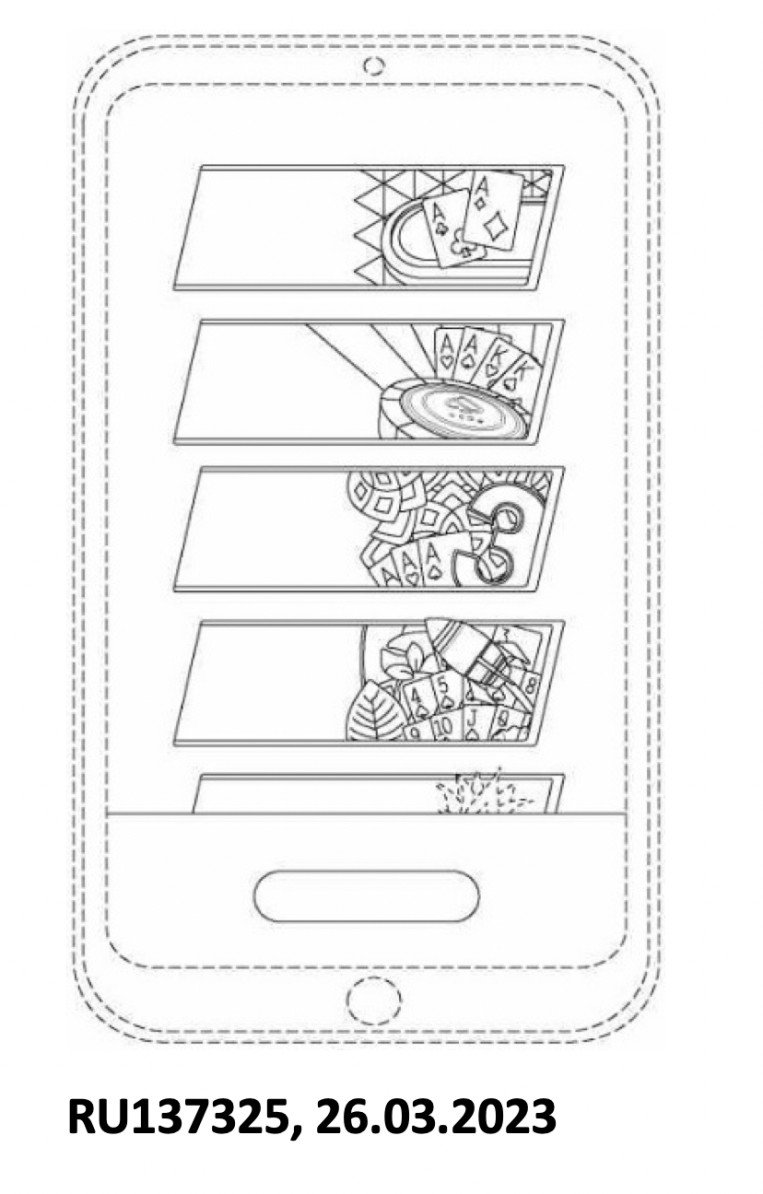
Under the first strategy, the GUI is depicted using solid lines, whereas the contours of the electronic device are shown in dashed lines to visually disclaim the features for which the applicant does not claim protection. This concentrates the scope of protection on the interface alone, avoiding its tie-in to a specific device configuration.
The alternative approach consists of filing an application that displays the GUI exclusively, entirely omitting any graphical representation of the electronic device:
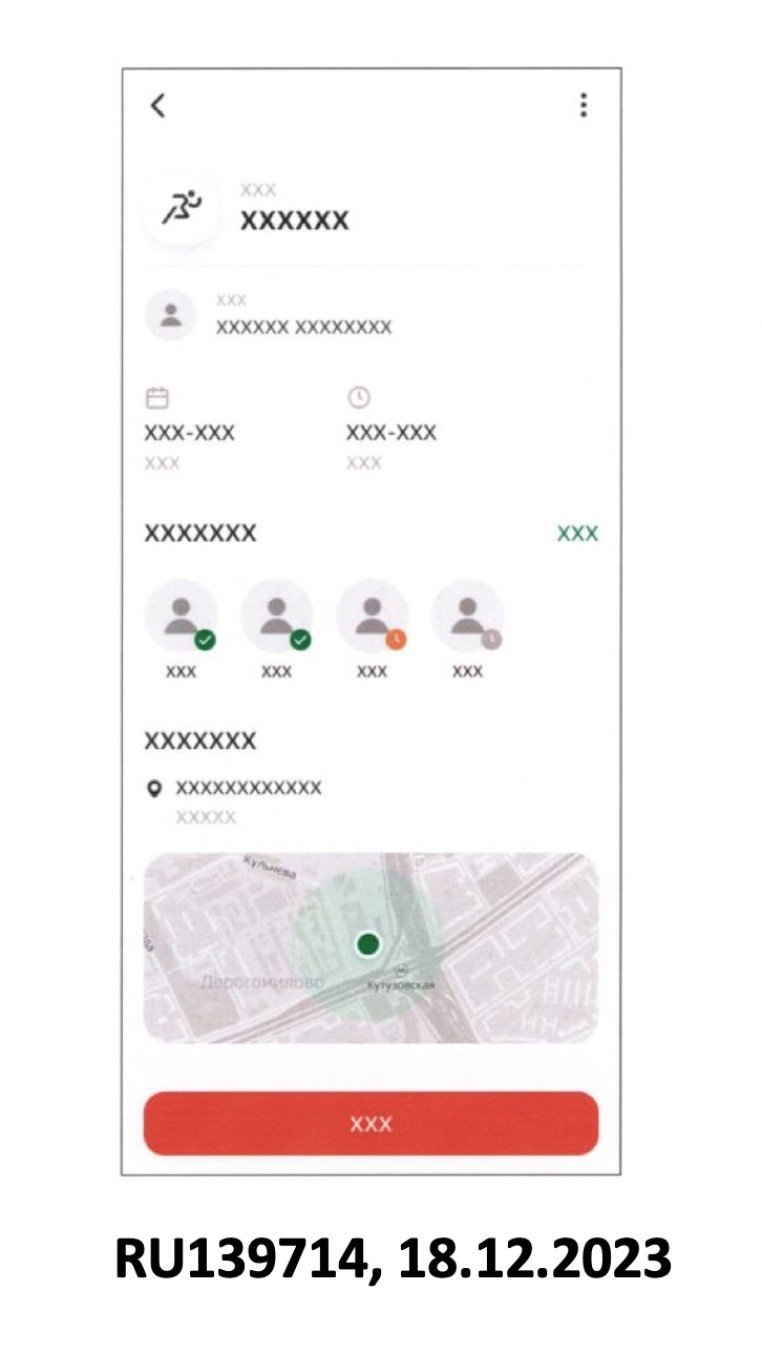
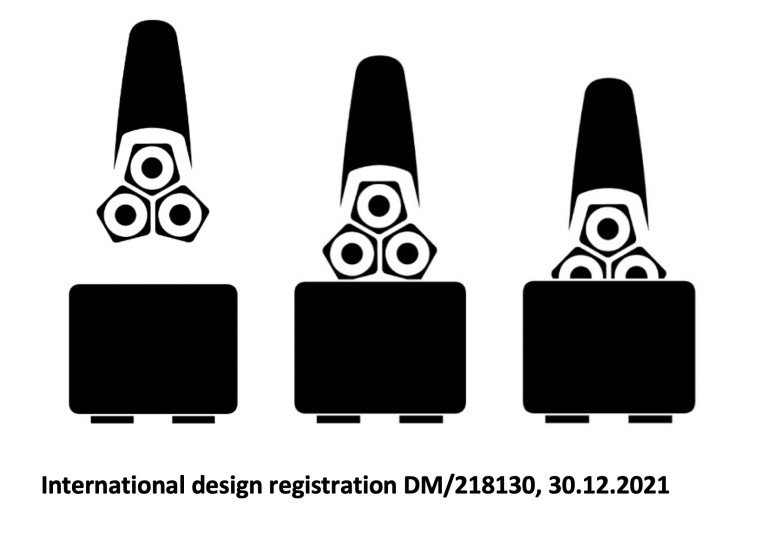
However, when adopting the second approach, it is necessary to ensure that the periphery of the display screen remains clearly delineated, in either solid or dashed lines. Omitting the bounding frame entirely may result in a refusal to grant protection. A case in point is the substantive examination of international design registration DM/218130 designating the Russian Federation, in which Rospatent refused protection for an animated GUI because the representations lacked a display screen, presenting the interface as an open composition without clear boundaries:
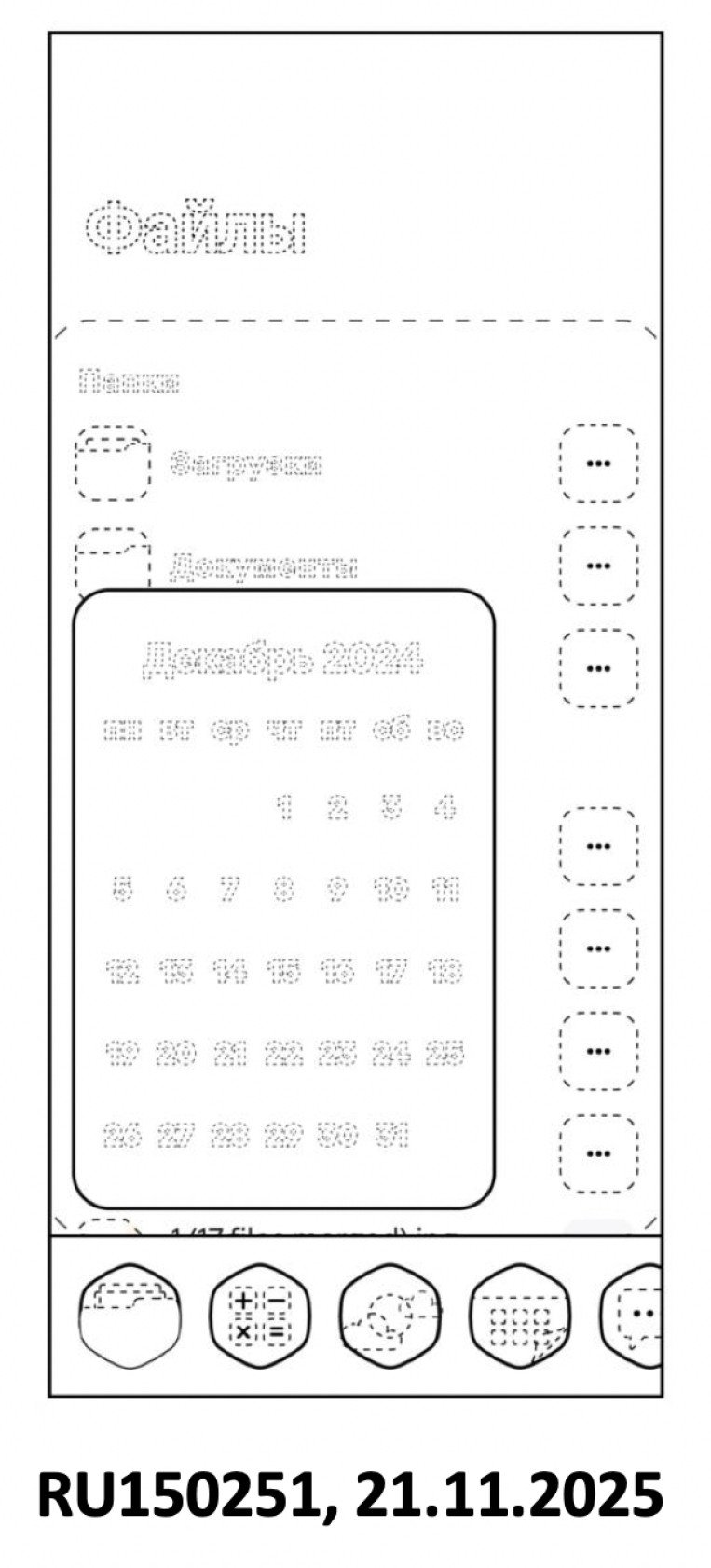
Dashed lines are also can be used to disclaim specific internal elements within the GUI itself:
A key advantage of the Russian approach is the flexibility to secure protection not only for the GUI as a whole but also for its individual components, such as control panels, icons and other discrete elements. Provided they meet the patentability criteria, notably global novelty and originality, these elements can be protected as independent industrial designs:
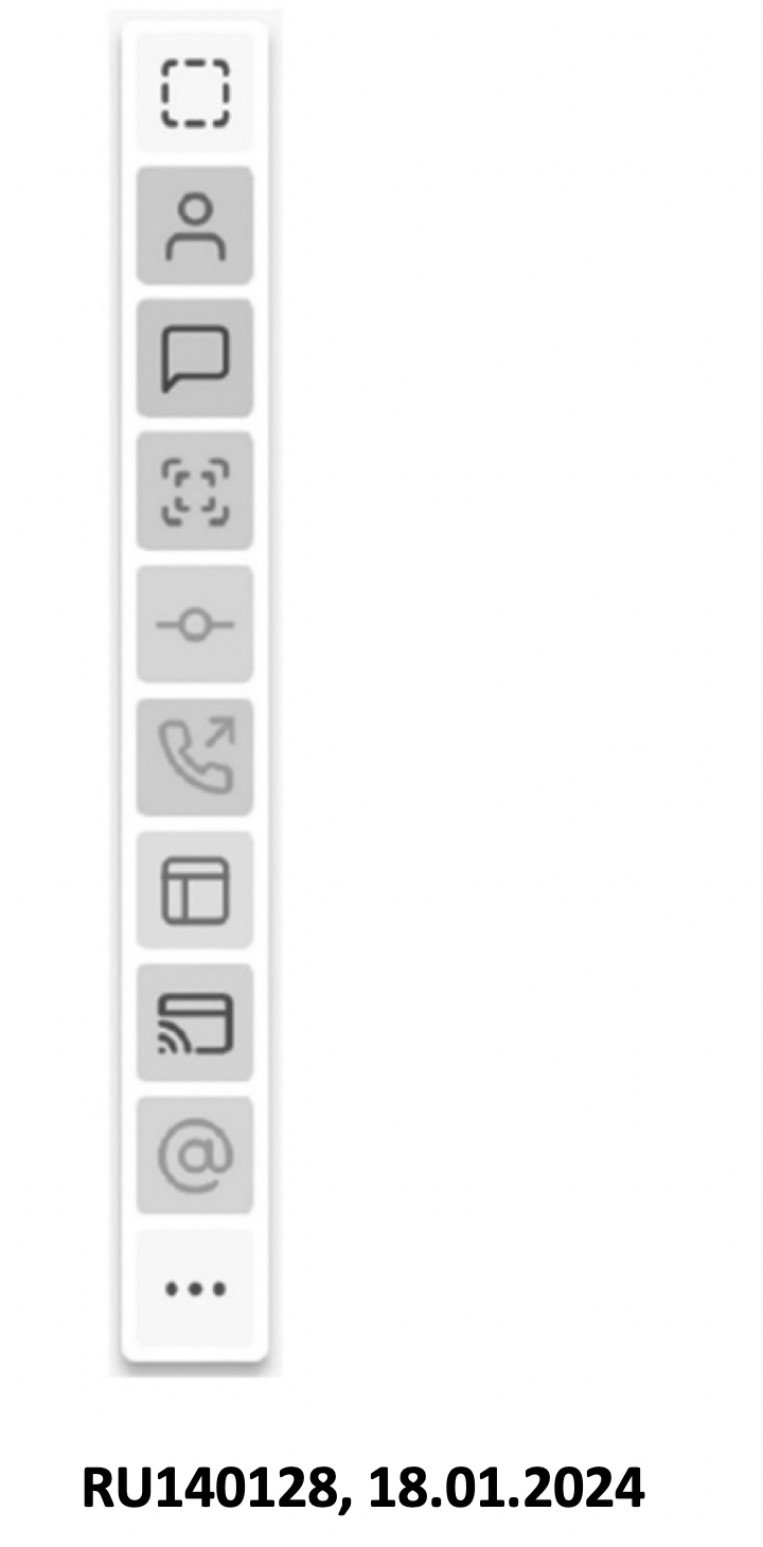

This allows applicants to develop a flexible, modular protection strategy, securing key GUI elements independently of one another.
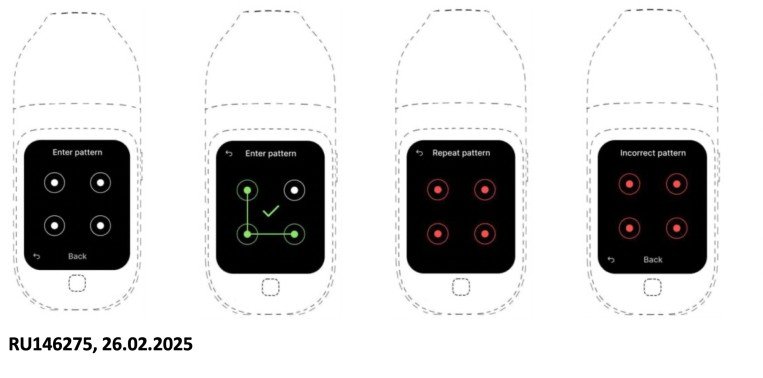
A prominent trend is the rise of animated (transitional) GUIs, which are protected in Russia by submitting a sequence of static images illustrating the key phases of the animation:
When filing an industrial design application in Russia, compliance with the requirement of unity of design, as set forth in Article 1377(1) of the Civil Code, is critically important. Pursuant to Clause 2 of the Requirements, this requirement is satisfied if the application relates to either a single industrial design or a group of designs combined by a single creative concept. A single creative concept is recognized, inter alia, when the group includes a design for a set (kit) of articles as a whole alongside designs for individual components within that set, or when the designs represent variants of an article's appearance that differ only in non-essential features and/or color combinations provided that all designs in the group fall under the same class of the Locarno Classification.
In the context of GUIs, the requirement of unity of design is deemed satisfied if the applicant claims, for example, a set of interface pages sharing a unified style and layout logic, or a collection of icons designed in a consistent visual style:
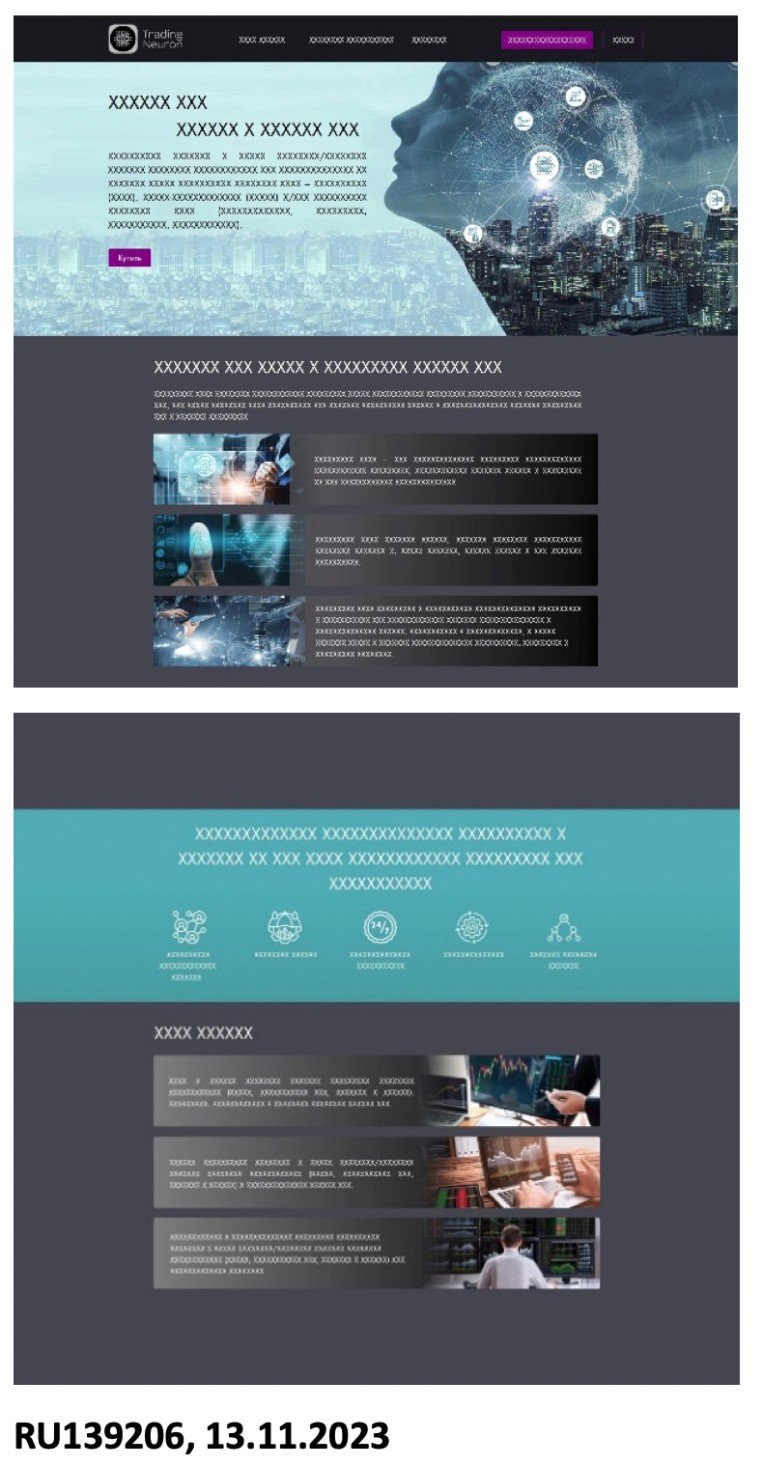
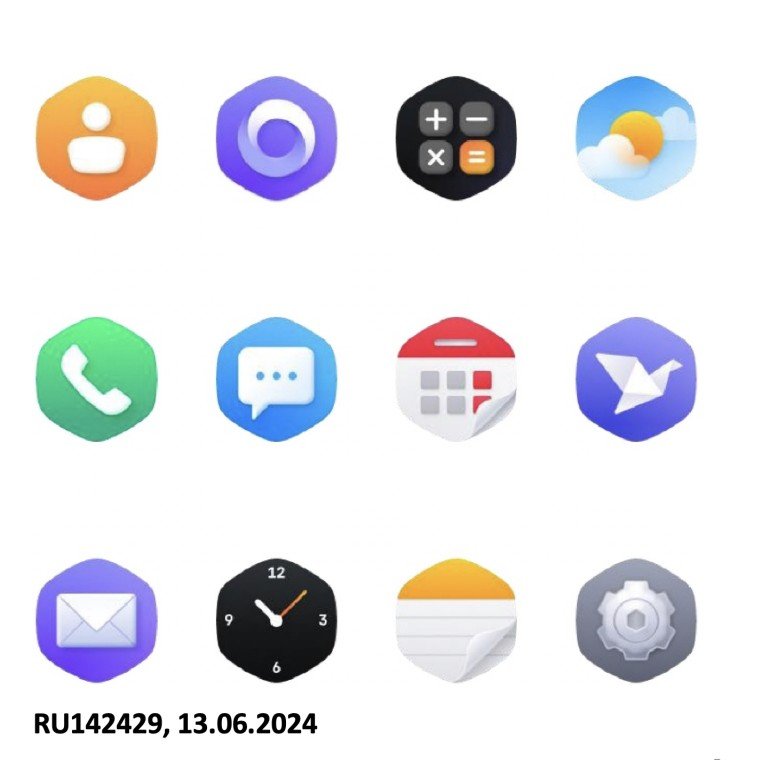
Specifically, combining GUIs within the same application is not permissible if they produce substantially different overall visual impressions or vary significantly in their claimed scope of protection; such solutions must be filed separately. Furthermore, when patenting a multi-page GUI, applicants cannot simultaneously claim the entire set and its individual pages within the same application; they must choose a single strategy.
The nature of digital product development often leads to the public disclosure of certain elements or the entire GUI before a patent application is filed. Such disclosures can happen during pitch presentations, exhibition demonstrations, through screenshots in marketing materials, or via beta-version rollouts. In these circumstances, Russian law offers a reliable protective mechanism known as a grace period: provided that an industrial design application is submitted in Russia within 12 months of the GUI’s public disclosure, such prior disclosure will not destroy the novelty of the claimed solution.
For internationally oriented companies, the Eurasian industrial design system offers immense strategic value, securing protection across all states party to the Eurasian Patent Convention’s Design Protocol: Russia, Kazakhstan, Belarus, Armenia, Tajikistan, Azerbaijan, Kyrgyzstan and Turkmenistan.
A key benefit is the option to file a multi-design application containing up to 100 designs within the same Locarno class. Crucially, the Eurasian procedure lacks the “single creative concept” requirement mandatory for Russian national applications, substantially expanding applicants' capabilities for comprehensive GUI protection.
Additionally, the Eurasian Patent Office (EAPO) exhibits notable procedural flexibility regarding graphical materials. Unlike Rospatent, the Eurasian framework allows for alternative disclaimer methods such as highlighting non-claimed features via color tinting, shading, or blurring alongside traditional dashed lines.
This distinction becomes particularly vital when claiming convention priority under Article 4 of the Paris Convention for the Protection of Industrial Property. Because both the Russian and Eurasian patent offices demand strict identity between the graphical representations in the priority application and the subsequent filing, inconsistencies in how the same features are visualized can trigger official actions or even lead to a loss of the priority claim. The methodological versatility permitted under Eurasian practice minimizes the risk of such discrepancies, simplifying the verification of identical disclosure for essential features.
For over two decades, GUI patenting in Russia relied on administrative interpretations of general statutes. Lacking explicit recognition as a distinct category, GUIs existed in a grey area of legal uncertainty, fueling debates on whether protection covered the interface per se or merely a specific “screen + interface” combination.
Upcoming legislative reforms will eliminate this ambiguity. Effective January 1, 2027, Federal Law No. 296-FZ explicitly amends Article 1352 of the Civil Code of the Russian Federation to allow protection for “a solution in the form of a visual display intended for human interaction with a computer program and generated by said program, or a component of such a display that has independent significance.” This elevates the GUI to an official, standalone intangible asset, rendering Russia’s patent framework more transparent, modern, and predictable.
About the author

Law firms