

Stronger Collaboration and Simplified IP Processes will make Technology Licensing Easier
05 February 2026
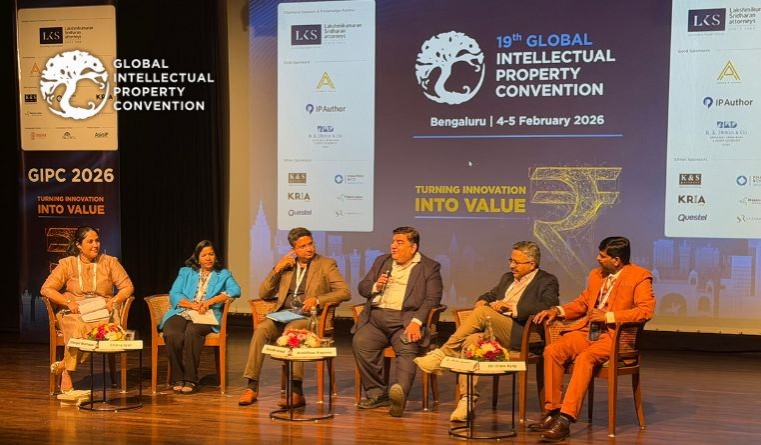
A diverse panel of intellectual property specialists, research‑park leaders, and innovation strategists convened to discuss India’s evolving technology‑licensing landscape, underscoring the urgent need to bridge the gap between academic research and market‑ready products. The session, revealed a shared belief that India must move beyond isolated innovation and enable stronger partnerships, clearer licensing structures, and more adaptable intellectual‑property strategies to compete globally.
From Invention to Impact: The Technology Readiness Level Gap
Opening the session, Dr. Dara Ajay, head of the technology transfer office at IIT Madras, emphasized that most technologies emerging from academia are stalled at Technology Readiness Level (TLR) 4 or 5—far from the TRL 8 or 9 needed for industry adoption. TRLs are a nine-point, NASA-developed scale used in research and development to assess a technology's maturity, ranging from concept formulation (TRL 1) to proven, mission-ready, or commercialized deployment (TRL 9). According to him, the core challenge lies in translating promising concepts into validated, scalable products that the market can trust. He highlighted the essential role of Research Parks, which offer incubation facilities, mentorship, and support systems that help young companies advance academic inventions toward commercialization. Market success, he stressed, must remain the ultimate aim—“not just profit‑making but societal impact.”
The Licensing Landscape: Tech, Marketing, and Collaboration
Gitanjali Bhatnagar, partner and head of Patents and design at Kria Law, expanded the discussion by noting that licensing is most powerful when technology and marketing are jointly leveraged. She explained that many technology creators excel in core R&D but lack manufacturing strength, distribution channels, or branding expertise. This is where collaborative licensing agreements become transformative: they connect innovators with firms that can scale, market, and monetize those innovations effectively.
Licensing, she emphasized, is not merely a transactional exchange but a strategic partnership that must be structured to offer competitive advantage. The right collaborations, she said, help companies expand into new markets and protect their intellectual investments.
IP Strategies Must Evolve With Technology
Picking up the thread, Dr. Chitra Iyer, director and licensing program leader – India, at Philips, argued that organizations must stop treating intellectual property as a static asset. Instead, IP strategies must evolve alongside shifting technologies, changing markets, and diverse product categories. A “one‑size‑fits‑all” approach to IP protection, she warned, no longer works. Companies need customized, product‑specific IP portfolios backed by careful planning and long‑term business vision.
He encouraged founders to consider multiple avenues for monetizing IP—beyond conventional licensing—including strategic partnerships, sub‑licensing, and integrated IP‑driven business expansion plans.
Bridging Academia and Industry: Valuation and Expectation Gaps
Returning to the theme, Dr. Dara addressed one of the persistent challenges slowing technology transfer from universities: valuation mismatches and misaligned expectations. He noted that professors often overvalue their inventions without fully understanding real‑world market needs or regulatory hurdles. Successful licensing, he said, requires negotiating a “win‑win situation” that respects academic contributions but aligns with industrial realities.
Unicorns, Innovation Hubs, and the IP Gap
The conversation then shifted to billion‑dollar valuations and the broader economic implications of licensing. Panellist Anubhav Kapor, general counsel and executive vice president (COSA) for Motherson Group, explained that while India has produced numerous unicorns, few of them truly leverage intellectual property as a central asset. This gap, he argued, reflects the country’s need for greater R&D spending, stronger IP enforcement, and better awareness of how intellectual property fuels value creation in a knowledge‑driven economy.
Inside Licensing Agreements: Terms, Clauses, and Liability
Several speakers underscored that effective technology licensing hinges on well‑structured agreements. Representations, warranties, IP identification, indemnification, and limitation‑of‑liability clauses all play crucial roles in defining rights and managing risks.
Panel experts highlighted the need for clear license grants, which outline the scope, exclusivity, and conditions under which technology can be used. Field‑of‑use restrictions and term‑based licensing were especially recommended to enable startups and institutions to manage value more effectively while retaining future flexibility.
Success Stories and the Value of Ecosystems
Dr. Dara shared examples from IIT Madras, where robust startup ecosystems and global outreach have enabled niche technologies to enter international markets and generate revenue through royalties. He emphasized that such success requires consistent nurturing, market alignment, and collaborative R&D.
The Need for Speed: Simplifying Licensing Processes
Several panellists, including Shankar Veru Gopal, argued that India must simplify licensing workflows to match the pace of global innovation. Faster execution, they said, is essential for enabling companies to integrate new technologies rapidly. Consortia models and standard‑essential patents were presented as promising mechanisms for streamlining access to critical technologies.
International Perspectives: Licensing as a Living Document
The panel concluded with an international lens, noting that U.S. and European systems often allow dual remedies—treating IP infringement and breach of contract as separate legal avenues. Licensing agreements, panellists agreed, should be treated as living documents, evolving alongside technology, markets, and regulatory frameworks.
A Unified Call for Collaboration
Across the session, one message was clear: India’s innovation economy will advance only if academia, industry, and legal ecosystems work together. Stronger IP strategies, streamlined licensing processes, and deeper collaboration are essential for turning inventions into impactful market solutions.
Panellists were speaking on day one of the GIPC, held in Bengaluru (Bangalore) on February 4 and 5.
- Darren Barton, at the GIPC in Bengaluru, India