“Open-sourcing parts of AI models undeniably fosters collaboration and the progress of the industry as a whole; however, it also risks exposing proprietary elements like training methodologies or unique architectural components that competitors could replicate,” she said.
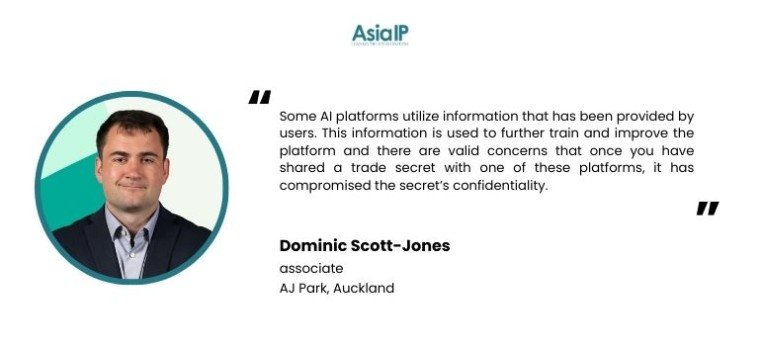
She gave an example. While open-source models still claim to employ access controls and licensing restrictions to protect trade secrets related to model optimization and data curation, this balancing act becomes even more complex when employees inadvertently input sensitive data into public AI tools or when AI-generated outputs blur the lines between original trade secrets and derived content.
“AI companies can address this tension by employing multi-pronged strategies to safeguard their innovations,” Wong said. “First, hybrid IP approaches combine selective patenting with trade secrets – some companies’ shift toward patents protects core algorithms while retaining proprietary training data as trade secrets. In fact, an open-source policy doesn’t require the company to disclose all its developments and technology, the crown jewels can remain protected as trade secrets or patented technology.”
She added: “Second, technical safeguards such as encryption, strict access controls and watermarking AI outputs help track misuse, as with some of the ones with more AI/data use restricted environments. Third, legal housekeeping and policy frameworks become critical: robust NDAs for employees, consultants, partners and related parties, training, buy in, real implementation and impactful discussions on limitation to AI platform access for employees from work devices and compliance with emerging regulations like the EU AI Act and China’s emerging AI legislation.”
Differing international IP laws
Given the international nature of both OpenAI and DeepSeek, generally, the international scope of all these companies means that they must navigate various national IP laws, which are largely harmonized through the various global treaties, but still maintain certain variations between regions such as the United States, European Union and Asia.
“These differences affect everything from patent eligibility and duration to the validity and enforcement of trade secret protections, compelling AI companies to tailor their legal strategies to meet diverse local requirements,” said Wong.
In some jurisdictions, the lack of efficient trade secret enforcement may force AI companies to look for stronger IP protection such as patents (which, on the downside, require disclosure of the technology to the public). In contrast, other regions may offer stronger trade secret protections, prompting firms to lean more on internal controls and non-disclosure agreements.
Wong said that balancing these approaches is key to safeguarding proprietary technology while complying with local legal frameworks.
Another essential element to consider is that the law concerning AI (whether AI platforms risk copyright infringement based on their training datasets) is still in its initial stages of development, with various major cases making their way through the national courts, and which may lead to different outcomes.
“Further, there are differing standards and applicable legislation in data privacy legislation and cybersecurity, which further complicate the legal landscape. Companies must adopt region-specific compliance measures to protect sensitive data and algorithms and must collaborate with local legal experts to draft enforceable agreements and establish robust internal protocols that mitigate the risk of inadvertent disclosures or loss of IP,” said Wong.
For export control laws, and the limitations of access to high end computer chips, factoring into the IP legal battles between companies, export control laws and restrictions on high-end computer chips may risk creating an additional layer of complexity in IP legal battles between companies generally, said Wong.
“For some time now, countries have tried to restrict access by using export controls, pricing, infrastructure, FDI regulations, among others, on access to related technology and raw materials including advanced semiconductor technology, which can limit the transfer of key hardware and software components essential for developing cutting-edge AI systems for others,” she said. “It also means that companies will find alternatives to develop its platform and technology despite those restrictions, which were already in place at that time. It therefore seems doubtful whether these restrictions will be the main factor in settling the IP and commercial battles between these companies.”
Who may win?
With the development within the AI Industry already going far beyond legislative IP frameworks in many jurisdictions, policy and decision makers are taking steps to update the law to reflect these advancements.
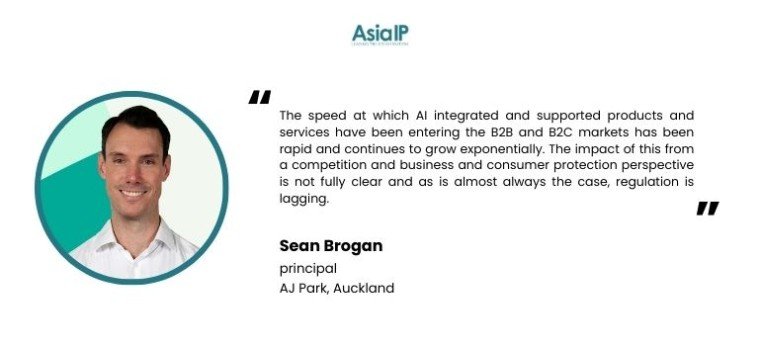
“The attitude towards artistic works and copyright in China is quite different from the U.S. and rest of the western world,” said Brogan. “If DeepSeek wins the battle, it may have implications for how copyright works used in the creation or training of these generative products are treated. It may get to a point of no return, where such works have been used to such a degree that legal action is futile.”
He said that due to external factors, there are significant differences in the output of the generative models created by DeepSeek and OpenAI, including where it comes to the censorship of the output.
“Because of this, we see consumers outside of China having more faith in the OpenAI outputs,” he said. “However, it is difficult to predict who will win this battle as there are many unknowns that will factor heavily into the direction of AI generally. It is also worth noting that superior infrastructure and funding does not always equate to superiority in innovation. Innovation and disruption will often come from unexpected sources despite perceived adversity and uneven playing fields.”




-content_x-large.jpg)