
India rejects AI as ‘author’ but recognizes the person behind the AI
30 September 2026
Every work of art has always had a maker. Copyright law was built on that simple assumption. Generative AI has quietly unsettled it: today, an image can appear on a screen without any human having drawn a single line.
It was only a matter of time before the law was asked who owns such a work. On August 31, 2026, India’s Copyright Office declined to register an artwork that listed an AI system, DABUS, as its author, bringing a four-year case to a close and setting out India’s position on whether a machine can legally be considered the author of the work.
How the case began
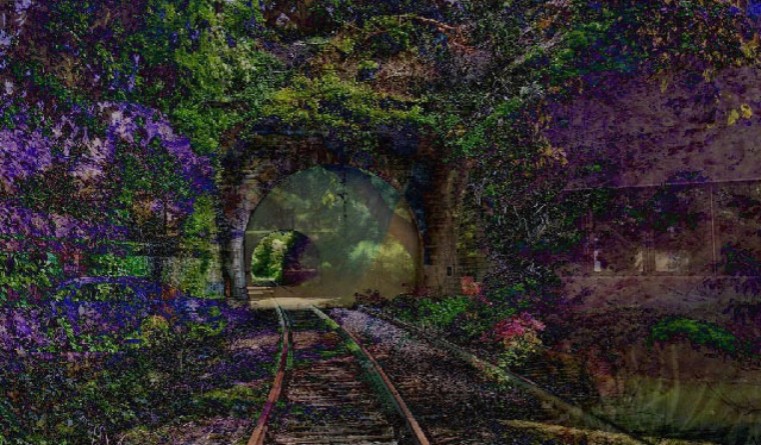
In 2022, Dr. Stephen L. Thaler applied to register a picture titled A Recent Entrance to Paradise. Rather than naming himself as the author, he named DABUS, short for Device for the Autonomous Bootstrapping of Unified Sentience, an AI system made up of connected neural networks that Thaler describes as capable of generating and refining its own ideas without human guidance.
The choice was deliberate: Thaler was seeking recognition not for himself, but for his machine. Under Indian copyright law, however, an author must be a natural person or a legally recognized entity, such as a company, not a piece of software. The Copyright Office raised this objection early on, and over several years of correspondence, replies and hearings, kept returning to one question: how can a machine be treated as an author?
Before answering it, the office first had to decide whether there was anything here worth protecting at all.
Is the artwork ‘original’?
On this point, the office ruled in the applicant’s favour. Under the Supreme Court’s test, a work needs only to be independently created and show a minimal degree of creativity. It need not be groundbreaking, nor must every detail be consciously chosen by a human. Since the image was not copied from any existing work and had a distinct composition of its own, it met this threshold.
Who is the actual author?
This was the heart of the case. Indian law defines the author of any literary dramatic, musical or artistic work which is computer-generated as “the person who causes the work to be created.”
Thaler argued that this should mean DABUS, since the AI produced the final image independently, with his own role limited to setting up the system in advance. Naming DABUS, he said, was a matter of accuracy: omitting it would wrongly suggest that he had personally created the final expression. He also pointed to films, where a company may be the legal “author,” to suggest that a non-human entity could qualify.
It was a striking position: an applicant asking the law to give him less credit, not more.
The Registrar did not accept it. The order applied the “mastermind” test adopted in comparable cases, under which the true author is not necessarily the person who carries out the final step in the creative process, but the person who conceives the work, sets the process in motion and directs it; the guiding intelligence behind its creation.
Applying this test, the office concluded that Thaler, rather than DABUS, was legally the person who caused the work to be created. Thaler had designed and trained the system, personally took the source photographs, supplied the visual inputs comprising those photographs, curated the linguistic inputs, provided textual descriptions linking the visual and linguistic material and initiated the process that produced this work.
The test works neatly here, because Thaler’s fingerprints were on every stage. But what happens when the human role shrinks to a single line typed into a prompt box? At some point, the “mastermind” may be little more than the person who pressed the button.
Why the application was still rejected
Despite these findings, the application was ultimately rejected. During the hearings, Thaler was given a direct opportunity to amend the application and name himself as author, but he declined, insisting that DABUS remain listed instead. As an AI system cannot legally hold authorship, and the record was not corrected, the application could not be registered in its existing form. The order does, however, leave open the possibility of a fresh application filed on the correct basis.
The irony is hard to miss. The work was original. A lawful author had been identified. Protection was available. It was refused only because the person entitled to it would not accept it.
The broader significance
The Copyright Office was careful not to lay down a general rule for all AI-assisted works, noting that the degree of human involvement may vary from one system to another. It also made clear that the larger question, whether AI systems should ever be granted legal personhood, is not one that a copyright office can resolve.
The overall position, then, is this: AI-assisted works can be original and eligible for copyright protection in India, but authorship continues to vest in the human who directs the creative process, not in the AI system itself. Its restraint is telling: the real answers, it suggests, lie in legislative choices yet to be made.
Global perspective: Where does India stand?
Thaler’s campaign on behalf of DABUS has spanned roughly 18 jurisdictions worldwide, and the results reveal a clear fracture in intellectual property law.
- The rejection bloc: Courts and offices in the United States, the United Kingdom, Switzerland and the European Patent Office have held that an inventor or author must be a natural person. India now joins this majority.
- The outliers: Only a handful of jurisdictions, such as South Africa, initially registered DABUS, largely because their systems examine applications for form rather than substance.
- India’s distinctive middle ground: Unlike jurisdictions that struggle with computer-generated works, the Indian statute expressly anticipates them, vesting authorship in the person who causes the work to be created. India rejects the machine but firmly elevates the human architect behind the prompt.
Different routes, same destination: for now, the world agrees that only humans, i.e., natural persons can be authors. Whether that consensus survives the next decade of AI development is far less certain.
About the author


Law firms